


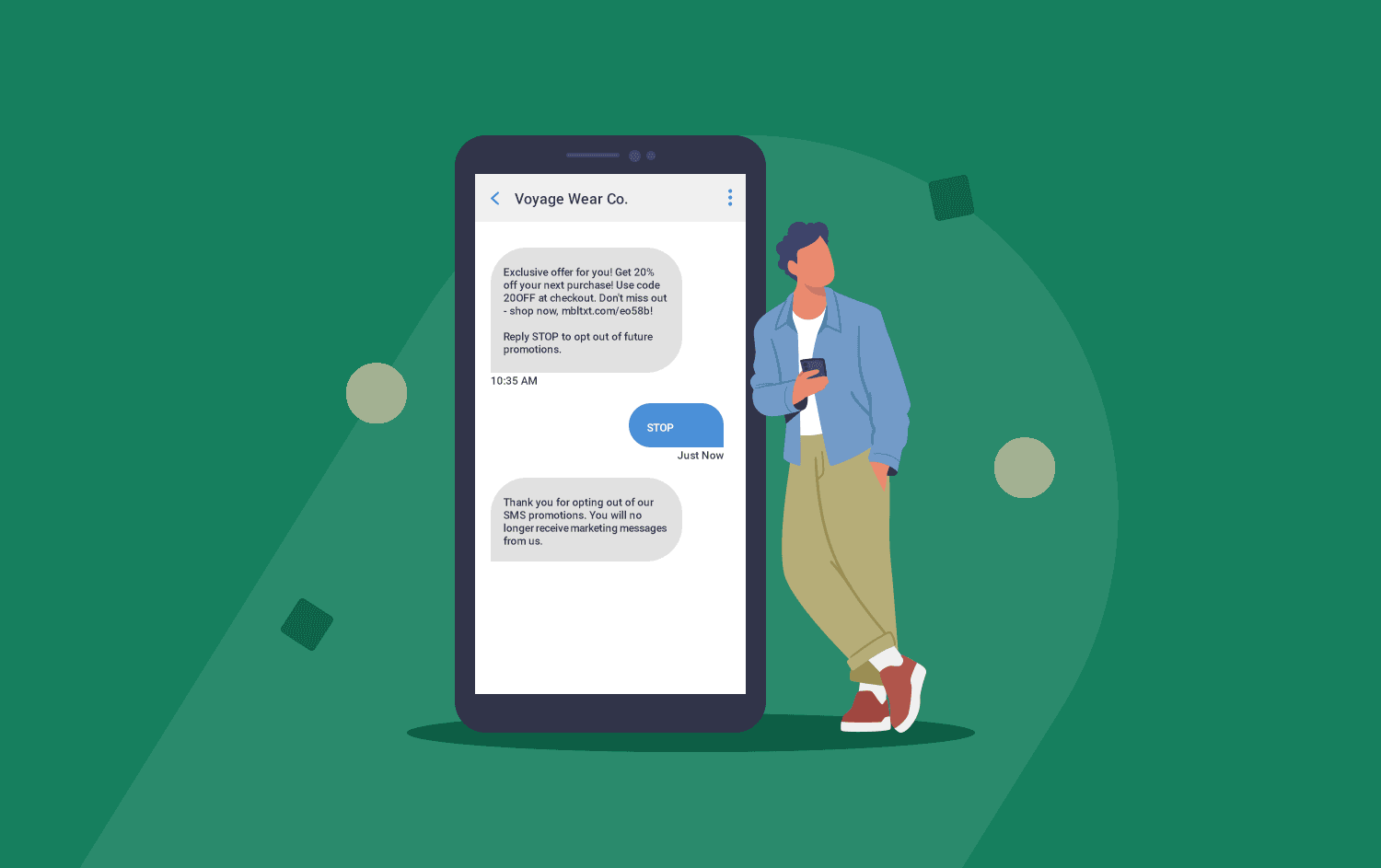
Most SMS providers (such as Mobile Text Alerts) automatically unsubscribe your recipients if they respond with the word STOP (or other trigger words such as UNSUBSCRIBE and QUIT).
After all, some people will want to opt out of your SMS campaigns, no matter how valuable the content you’re sending is.
And for these (hopefully few) people, the opt-out process needs to be EASY.
Aside from the need to comply with anti-spam guidelines and laws, you simply don’t want the stress and hassle of dealing with angry subscribers who continue to receive texts after attempting to opt out.
This article will walk you through how that works.
What Does "Reply Stop to Opt Out" Mean?
"Reply STOP to opt out" means that recipients of a text message and reply to the message with the word STOP. When they do this, their phone number will be automatically removed from receiving further text messages.
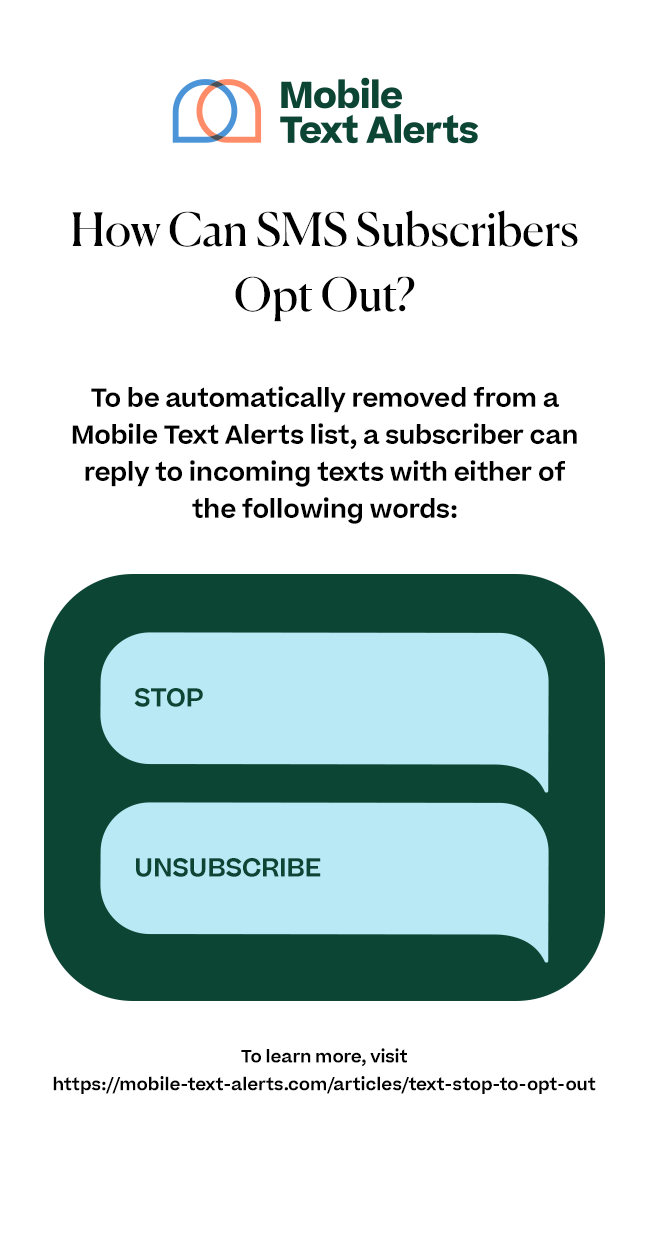
With Mobile Text Alerts, when your subscribers unsubscribe like this, they will also be placed onto a “blacklist,” so that you can’t accidentally add them back in.
And upon sending that STOP response, the subscriber will also receive a final automated notification letting them know that they have been successfully removed. (That way, your subscriber can be confident that the unsubscription worked correctly.)
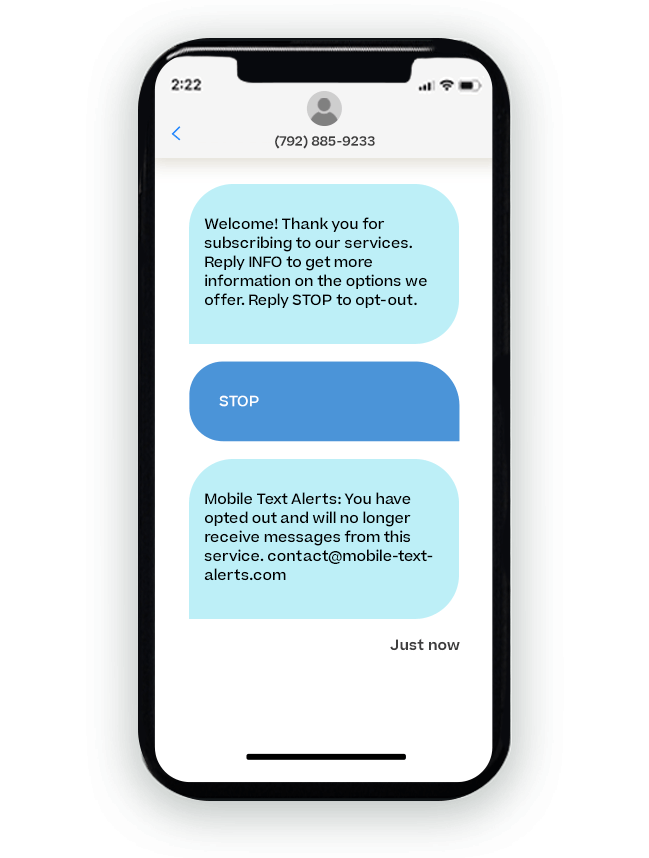
You do need to make sure on your end that your subscribers are aware of the opt-out instructions.
You’ll want to include your opt-out instructions (for example, “Reply STOP to opt out”) when your subscribers are first signing up for your texts.
It’s also recommended to include the “opt-out” instructions at the end of every message you send.
This automated opt-out process saves you the hassle of having to sort through your subscriber’s replies and manually remove them. It can also ease your concerns about accidentally sending messages to them in the future, since you’re not able to add unsubscribed contacts back in.
But keep in mind that you also need to be monitoring responses that you get back, in case someone asks to be unsubscribed with other words or phrases that don't trigger the automatic removal. For example, if someone replies, "Please don't text me anymore," you will need to manually remove them.
Why You Need to Allow Subscribers to Text Stop to Opt Out
Sending messages to people who don’t want to receive them can have several consequences:
- It can get you into legal trouble
- It can raise red flags with phone carriers and providers, so that they start preventing your messages from being delivered
- It can jeopardize your account with your SMS platform since it’s against platform policies
- It can damage your brand’s reputation if it leads to bad reviews or negative word-of-mouth
You want to avoid all of that. And you don’t want your subscribers to feel frustrated at receiving messages they no longer want.
Thus, you need to provide simple opt-out instructions. Your SMS platform, like Mobile Text Alerts or Sender, makes this easy by automatically removing people who text STOP to opt out from your text list.
Other Ways Subscribers Can Be Removed
So what about if someone asks to be taken off your list without using the STOP response? Or what if they tell you that they want to be removed via an email or phone call?
Is there still an easy way to remove them?
You can easily unsubscribe people from your text list by using Mobile Text Alerts' SMS Inbox. From there you can view your conversations with subscribers, and there’s a simple “unsubscribe” button on each conversation thread.
That button not only removes them from your database but puts them on the “blacklist” that we mentioned before, so that they can’t be accidentally added back in again.
Another simple way to remove subscribers is from your Manage Contacts page. This page allows you to delete any of your text contacts. (Note that removing contacts on this page does not add them to the “blacklist,” so you are able to add these users back in.)
Having these other options for removing subscribers means that you can remove contacts whenever you need, so that you’re not stuck in an awkward situation with subscribers struggling to opt out.
How to View People Who Text Stop to Opt Out | Opt-Out Report
You can view the full list of everyone who sent the text STOP to opt out (or who were unsubscribed from your Inbox page). This is called the Opt-Out Report.
After all, you may think it’s great that people can easily opt out, but you also want to be able to see who has unsubscribed.
You want to be able to track and manage who all has removed themselves from your text list. That way, you can be better informed about who’s receiving your messages and how many people have opted out.
You can then use that information to help you make decisions about how to go about your texting campaigns, or about whether you should reach out to the unsubscribed individual via some other means.
The opt-out report will give you the full list of all people who have opted out, including their name, phone number, email address, and date of opt-out.
This report is the “blacklist” we mentioned earlier. This means that any subscriber listed on this report won’t be able to be accidentally added back in from your Manage Subscribers page or by importing in a spreadsheet.
What Can You Do with This Report?
The ability to see everyone who has opted out will give you insight to help you determine action steps in several areas:
- Are you seeing a low number of opt-outs? Be encouraged that you’re on the right track with your messaging.
- Are you seeing a large number of opt-outs? Consider whether you need to have more enticing content in your texts or need to clarify your opt-in process.
- Are you seeing a low number of automated STOP opt-outs but a lot of other individual responses in your Inbox asking to no longer receive messages? Give more straightforward opt-out instructions in your texts.
- Are you seeing unexpected names on the opt-out list? Think about giving them a call or shooting over an email to see if you can get insight on why they opted out. (Be careful with this, however! If they opted out from your SMS, they may not want to hear from you via a different channel either.)
- Are you seeing an uptick of opt-outs on a particular date? Check your Sent Messages Report for what message was sent that day which led to the increase in opt-outs. Observe what might have gone wrong with the message so that you can create more effective messages for the future.
These are just a few of the ways you can use the information from the Opt-Out Report to bring about action steps for the improvement of your business/organization.
(Want to see how it works? Sign up for a free account today to try it out!)
How Subscribers Can Be Added Back In After They Text Stop to Opt Out
If the unsubscribed individual wants to be added back in again, they do one of the following:
- They can reply START to your account’s phone number.
- They can text in one of your account’s “keywords” (“text to join” words).
- They can scan one of your account’s QR codes.
- They can sign up via your account’s online sign-up page.
These various options ensure that your subscriber is able to easily and quickly add themselves back to your text list.
How to Prevent People from Wanting to Opt Out
How do you prevent people from wanting to opt out in the first place?
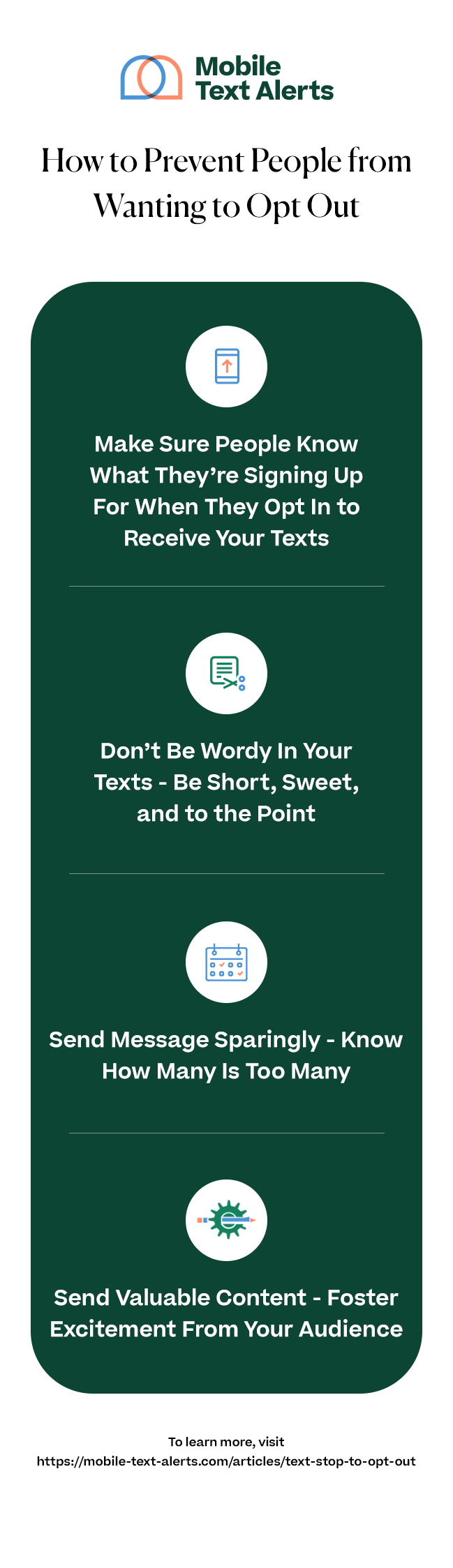
Here are 4 tips to keep in mind.
1. Make Sure People Know What They’re Signing Up For
People should clearly understand what they’re signing up for when they initially opt in to receive your texts.
If you’re vague or unclear when promoting your text list, people will opt out once they realize it wasn’t what they expected.
And not only will they unsubscribe, it may give them negative opinions about your brand.
You don’t want that.
2. Don’t Be Wordy
You're used to sending emails.
With emails, being long-winded and wordy isn’t as much of a deal, and is sometimes useful.
SMS is different. The definition of SMS is literally “short message service,” after all.
With that said, texts generally work better when they are short, sweet, and to-the-point.
Every word is precious, so make each one count, and keep your messages under 160 characters whenever possible.
This can help keep people’s attention so that they don’t lose interest and unsubscribe.
3. Send Messages Sparingly
People don’t have a lot of patience when it comes to their texts.
With emails, they expect to receive a lot of promotions and “junk mail.” With texts, people are mostly used to communicating with friends and family.
This is both the benefit and challenge of texting.
It’s a benefit because people pay more attention to their texts (since it’s a familiar, in-your-face mode of communication). It’s a challenge because if you abuse your audience’s attention you may lose it.
So generally speaking, you shouldn’t send texts every day. In most cases you shouldn’t even send them every week.
While you know your audience best, we would generally recommend sending 1 or 2 texts each month (usually 4 at the most, in a busy month).
4. Send Valuable Content
This goes without saying, but make sure the texts that you send provide real value to your audience.
Don’t send messages that are irrelevant, or too pushy, or obnoxious.
Know your audience well enough to know what they want, and then give it to them in your SMS campaigns.
The goal is that when they see they got a text from you, they’ll be excited (not annoyed).
So think about how you can foster that kind of excitement through valuable content.
FAQ
How to unsubscribe from texts?
How to opt out of text messages?
What does “stop to end text message” mean?
What is an unsubscribe text message?
Give texting a try for your business or organization - get a free trial today!
Author Bio

Sam Pelton is the content director for Mobile Text Alerts, an SMS service that gives businesses an easier way to reach customers and audiences. He has 12 years of experience working with the texting platform in the areas of customer support, quality assurance testing, content creation, copywriting, and marketing strategy. He’s also a father of 7 and loves a good (bad) dad joke. Connect with him on LinkedIn.