



Explore this content with AI
TL;DR: Best Automated Texting Software
Automated texting software lets you schedule, personalize, and trigger SMS at scale so reminders, promos, drips, and two-way replies run while you sleep. This guide compares text message system options (Mobile Text Alerts, SendPulse, Twilio, Emitrr, SimpleTexting, Textedly, EZ Texting, Attentive, Klaviyo, SlickText) and what to look for: a user-friendly dashboard, responsive support, and transparent pricing (watch for carrier/number add-ons).
Imagine having to manually send a text message to over 20,000 customers on a Friday night… or first thing Monday morning.
You’re racing against time, juggling a dozen moving parts, hoping your thumb doesn’t go numb in the process, and dreading the possibility of noticing a typo after hitting “sned.”
Well, that nightmare scenario is exactly what the best automated texting software is built to prevent.
A modern text message system takes the manual grind off your plate—letting you schedule campaigns, personalize outreach, and run SMS automation so your promotions, reminders, and customer updates go out every time, on time.
In this article, we’ll dive into some of the best automated texting software so you can get a feel for what’s out there as you try to decide which one might be best for your business.
(If you’d like to see automated SMS in action, you can try out an automated texting software now—totally free.)
Basic editorial updates were made September 18, 2026, including verifying vendor pricing. For current feature information, check vendor sites.
What's the Best Automated Texting Service? (10 Compared)
Here’s a list of some SMS automation software for businesses, reviewed and compared (note that these are not necessarily in ranked order).
| Tool | Best for | Starting price | What that covers |
|---|---|---|---|
| Mobile Text Alerts | Dependable SMS marketing automation | $20/mo | 500 messages/mo · no required add-on fees |
| SendPulse | SMS, email, and chatbots in one tool | $0.024/message | Pay-per-message |
| Twilio | Developers building custom solutions | $0.0083/SMS + carrier surcharges | Pay-per-message |
| Emitrr | Small businesses wanting AI-powered texting | $42/mo | 500 message credits |
| SimpleTexting | Quick campaigns with no setup | $33.20/mo | 500 messages |
| Textedly | Simple SMS plus text-to-pay and reviews | $29/mo | 600 messages |
| EZ Texting | Straightforward dashboard with visuals | $20/mo (Launch) | 6,000 messages/year |
| Attentive | Ecommerce AI-driven SMS and email | Not published | — |
| Klaviyo | Enterprise ecommerce, multi-channel | $20/mo | 5,000 emails + 300 SMS, then $0.011/msg + carrier fees |
| SlickText | Complex branching campaigns | $24.17/mo | 6,000 messages/year (~500/mo) |
Pricing verified September 18, 2026 from each provider's public pricing page. Per-month pricing reflects annual billing. Month-to-month options typically cost slightly more or offer slightly fewer messages per month.
Mobile Text Alerts
✨️ Best for: Businesses needing robust, dependable SMS marketing automation.
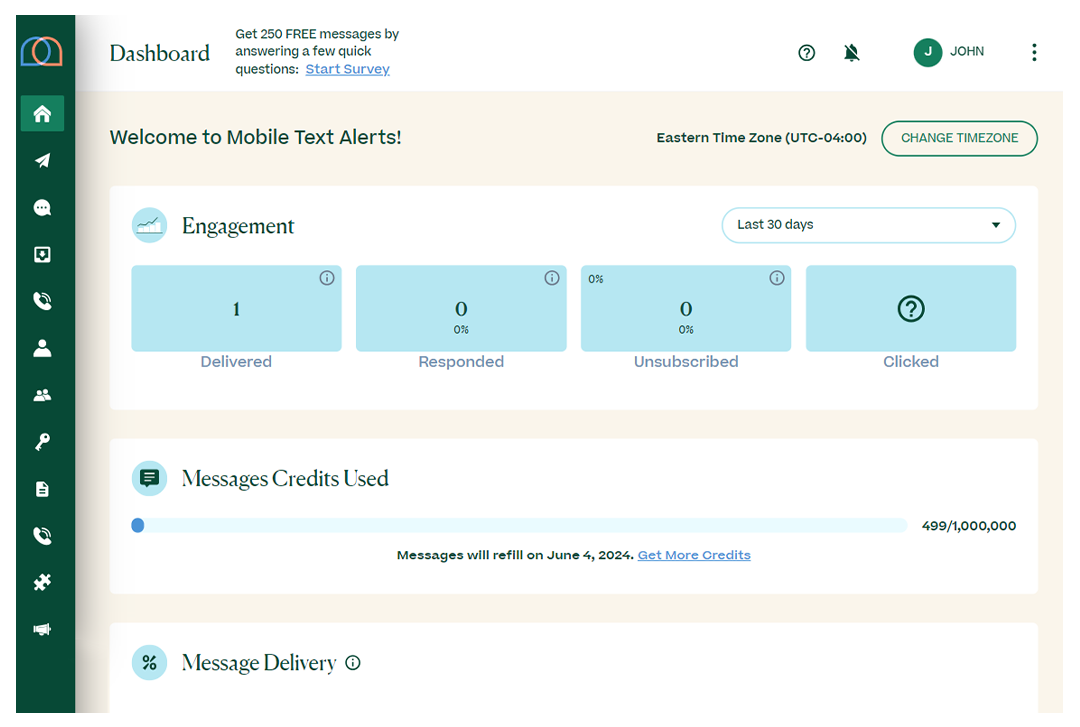
Mobile Text Alerts is a “standard” out-of-the-box, automated texting software that sets itself apart by being easy-to-use and having very attentive customer support.
It also has an SMS API that you can use to program the automations you’re looking for.
You can expect a response from live customer service reps within 10 minutes during business hours, and in less than 1 business day during off hours.
Pricing:
- $20/mo for 500 messages/mo
- $36/mo for 1,000 messages/mo
- $58/mo for 2,000 messages/mo
- $119/mo for 5,000 messages/mo
- $219/mo for 10,000 messages/mo
- $389/mo for 20,000 messages/mo
- Starting at $500 for 20,001+ messages
SendPulse
✨ Best for: Businesses and marketers who want a tool that combines SMS campaigns, email marketing, and chatbots (per SendPulse claims).
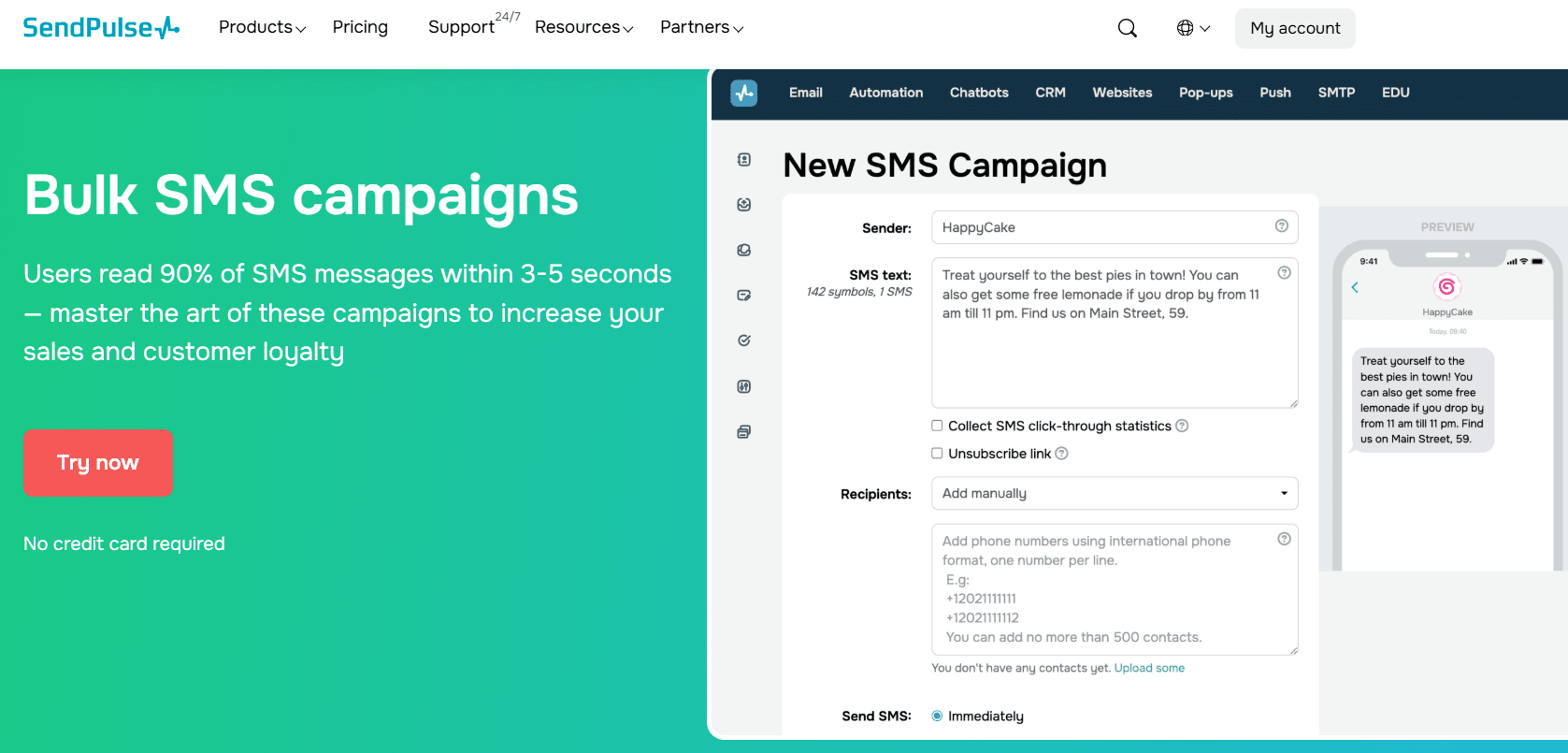
SendPulse is an out-of-the-box marketing automation platform meant to let you launch campaigns across multiple channels.
It is intended to be a flexible yet beginner-friendly solution that covers the essentials to launch SMS and email campaigns, and build chatbots - with the purpose being to help users get started with customer communication right away, and some reviews seem to corroborate this.
Pricing: $0.024/message
Twilio
✨ ️Best for: Developers and technical teams who want to build fully custom SMS solutions via API.
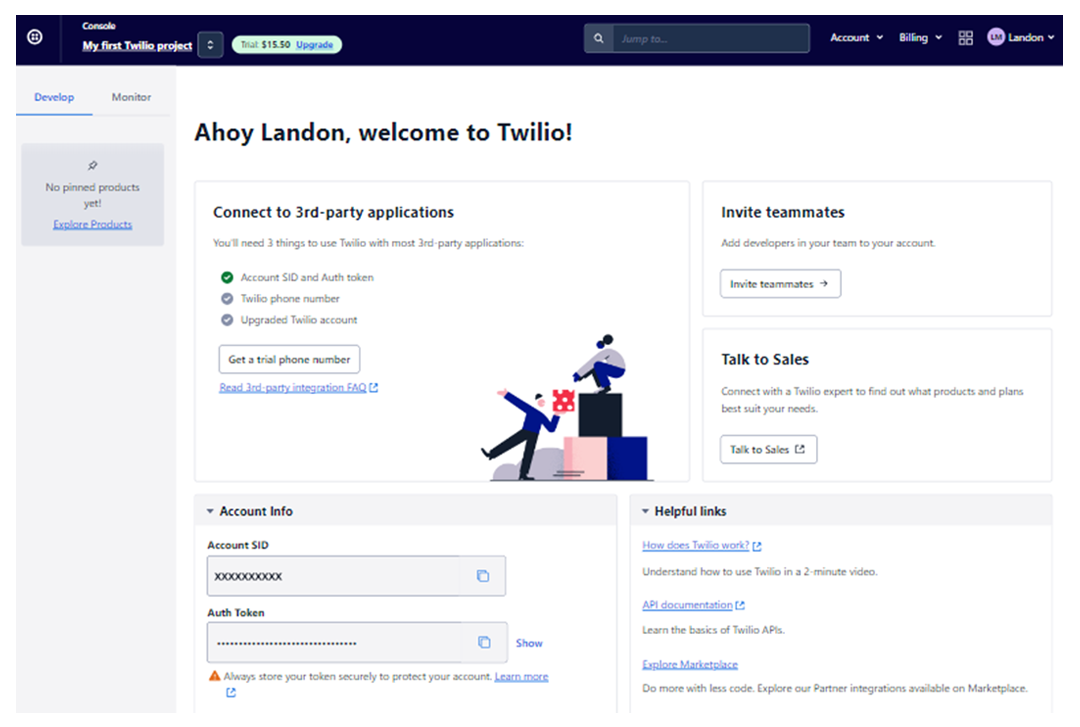
Twilio shines in their automation services offered via an SMS API (among other API features). Their robust API makes everything customizable.
They don’t have a robust, out-of-the-box platform for message sending, since they are an API-first provider. So you generally do need web developers in order to get it fully set up and operating.
Pricing: $0.0083/SMS + carrier surcharges.
Emitrr
✨️ Best for: Small businesses seeking AI-powered texting with reminders, two-way chats, and automation.
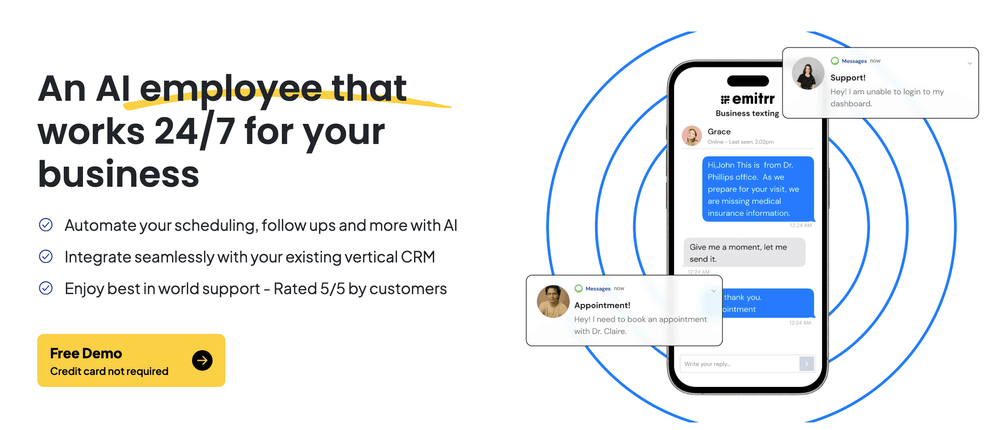
Emitrr is an AI-driven automated texting software built for seamless business communication. It offers robust SMS capabilities, including mass texting, two-way conversations, appointment reminders, and more. Its intuitive interface and advanced automation tools make texting faster, easier, and more effective.
Pricing: Starts at $42/mo for 500 message credits, with numerous tiers that scale as message usage scales
SimpleTexting
✨ ️Best for: Marketers who need an easy, no-setup texting software for quick campaigns.
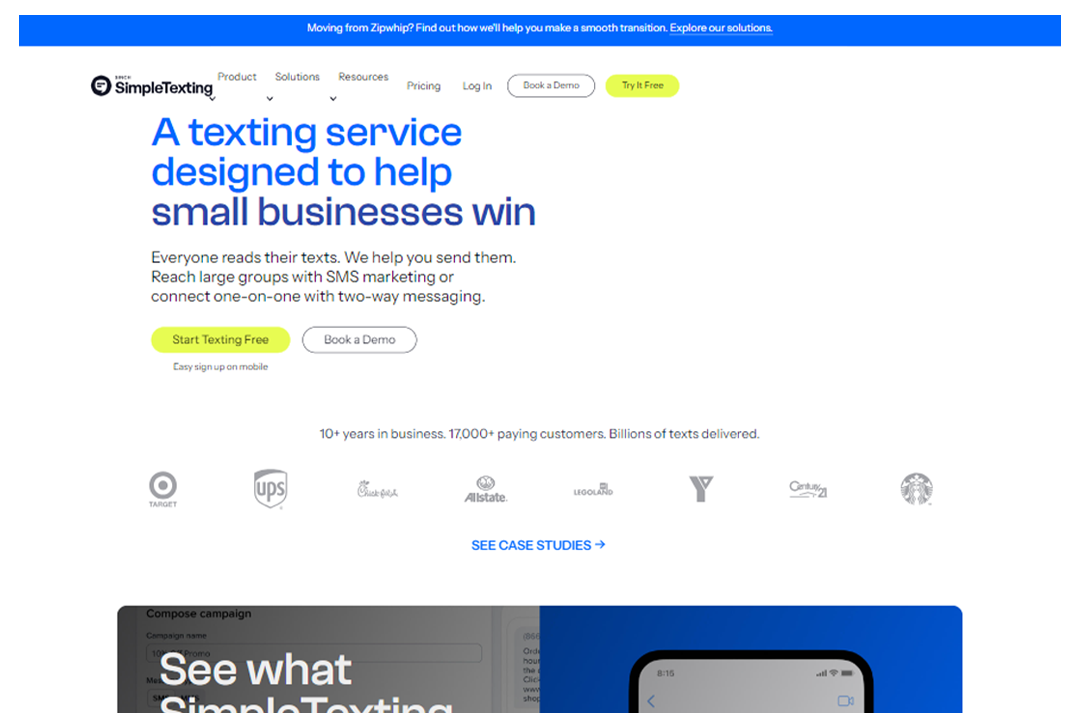
SimpleTexting is another out-of-the-box texting software that requires no setup.
It’s a simple and solid platform that offers all the basics you’ll need for getting started with automated texting.
Pricing: starts at $33.20/mo for 500 messages, with numerous tiers that scale as message usage scales
Textedly
✨️ Best for: Businesses wanting simple SMS marketing plus extras like text-to-pay and review collection.
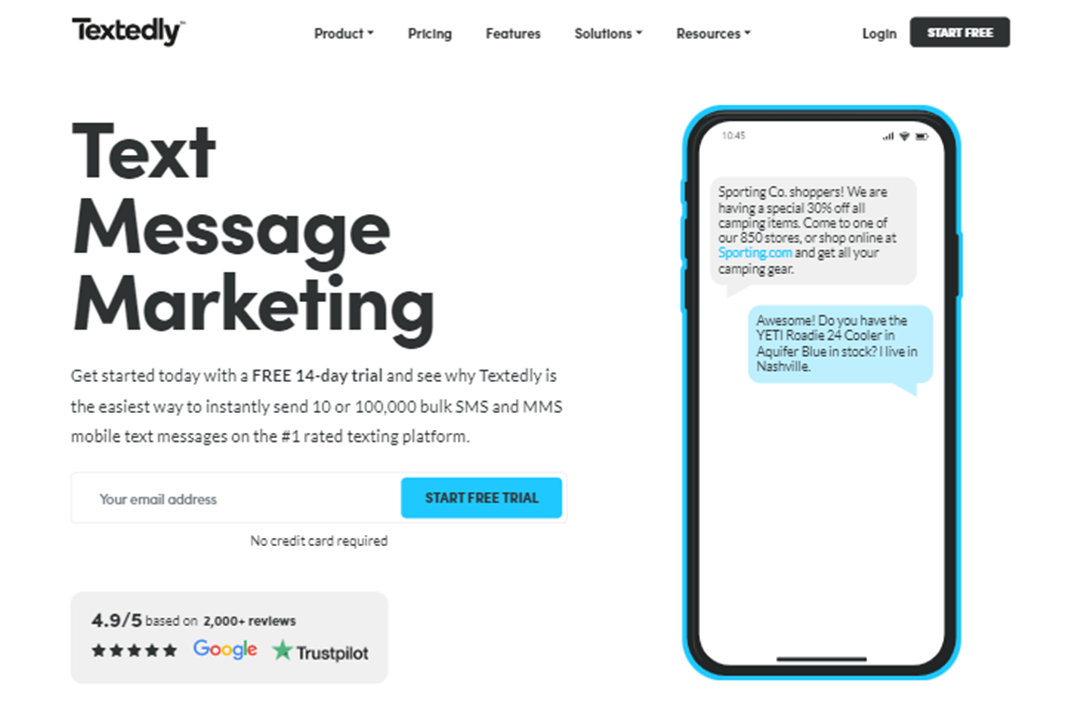
Textedly runs in the vein of both Mobile Text Alerts and SimpleTexting listed above as a simple SMS solution to help you get started with texting.
They also offer a couple of unique features such as “text-to-pay” capabilities and a review collection option.
Pricing: starts at $29/mo for 600 messages, with numerous tiers that scale as message usage scales
EZ Texting
✨️ Best for: Teams that value a straightforward dashboard with added visuals for SMS campaigns.
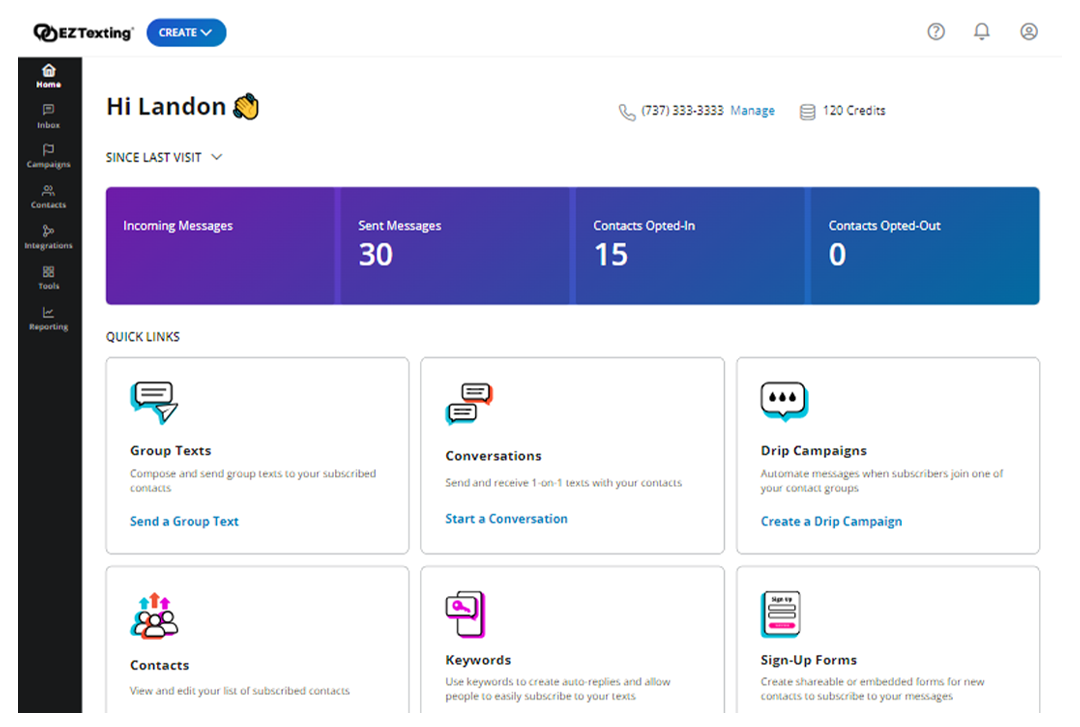
EZ Texting stands among other simple, online SMS platforms that allow you to easily send automated text messages from a convenient online dashboard.
To help with that effort, you’re able to take advantage of a Shutterstock integration so that you can easily incorporate some corresponding visuals to your text messages.
Pricing:
- Starting at $20/mo for Launch Plan (recommended for up to 500 contacts)
- Starting at $60/mo for Boost Plan (recommended for 500–2000 contacts)
- Starting at $100/mo for Scale Plan (recommended for 2,000-50,000 contacts)
- Starting at $3,000/mo for Enterprise Plan (recommended for 50,000+ contacts)
Attentive
✨️ Best for: Ecommerce brands focused on AI-driven SMS and email marketing automation.
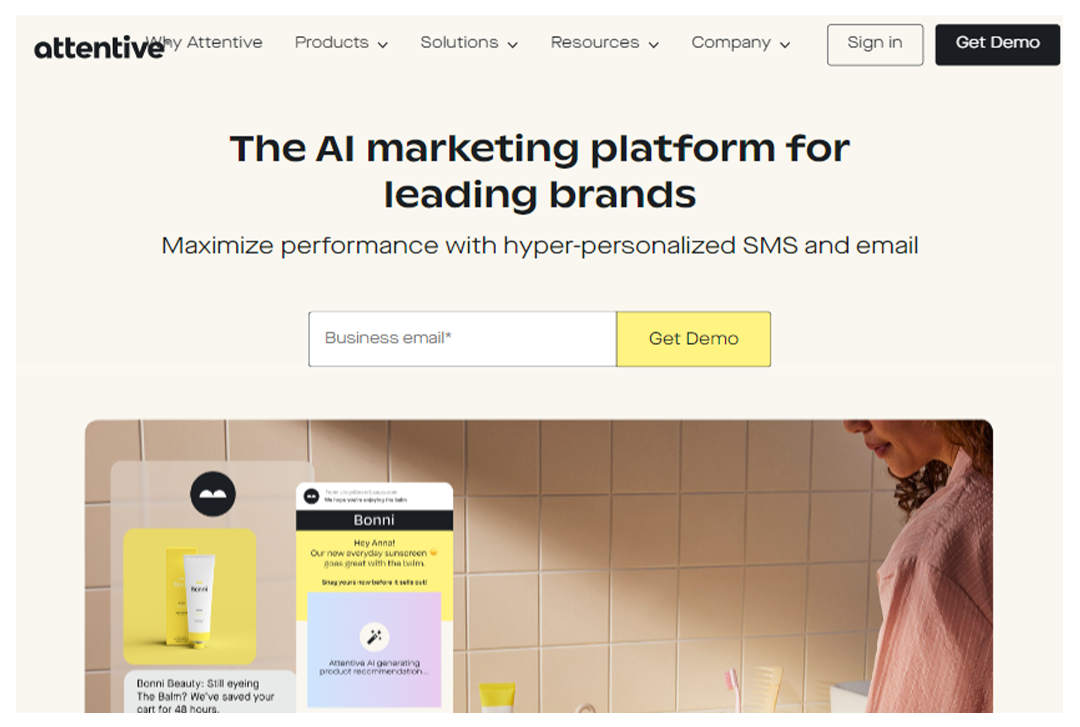
Attentive is a bit more robust than some of the other services mentioned here, as it carries an emphasis on AI marketing, including both SMS and email as channels.
Attentive also has a focus primarily on ecommerce.
Pricing: Not listed.
Klaviyo
✨ ️Best for: Enterprise ecommerce companies needing advanced, multi-channel marketing automation.
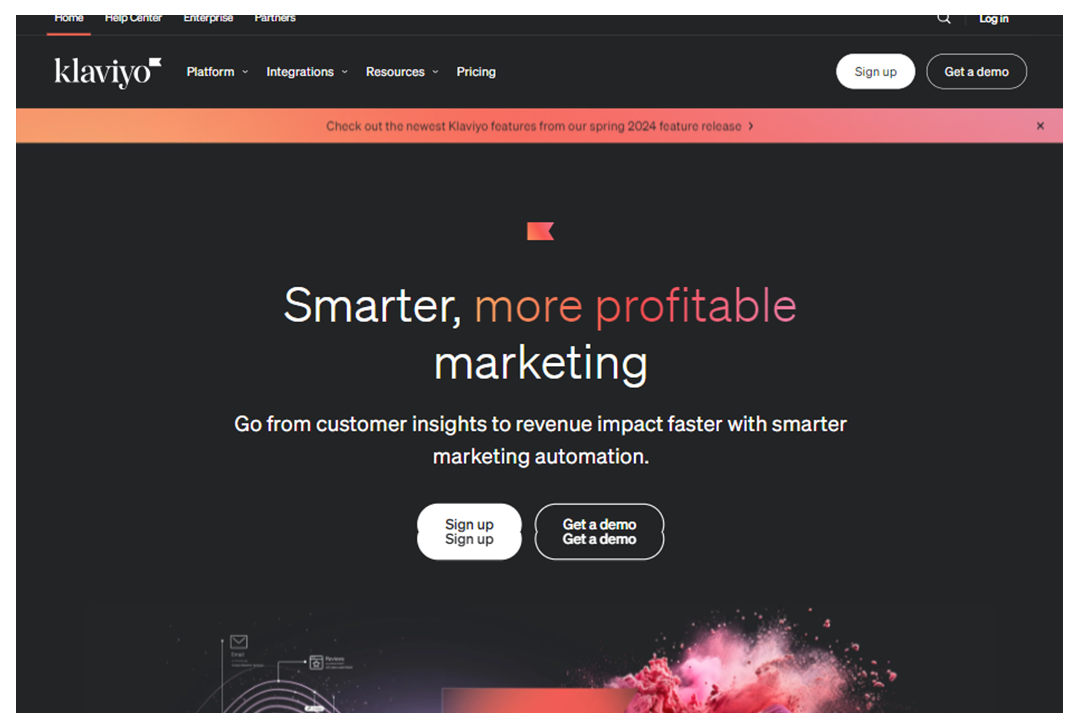
Klaviyo, along the same lines as Attentive, is more than an SMS platform but is a marketing automation service that includes email, SMS, and push notifications.
Geared more specifically toward enterprise ecommerce brands, Klaviyo is a robust option to consider.
Pricing:
- Starts at $20/mo for 5,000 emails (300 SMS included)
- SMS fees start at $.011/message + carrier fees
- Prices scale as message usage scales
SlickText
✨️ Best for: Marketers running complex SMS campaigns with branching flows and automation triggers.
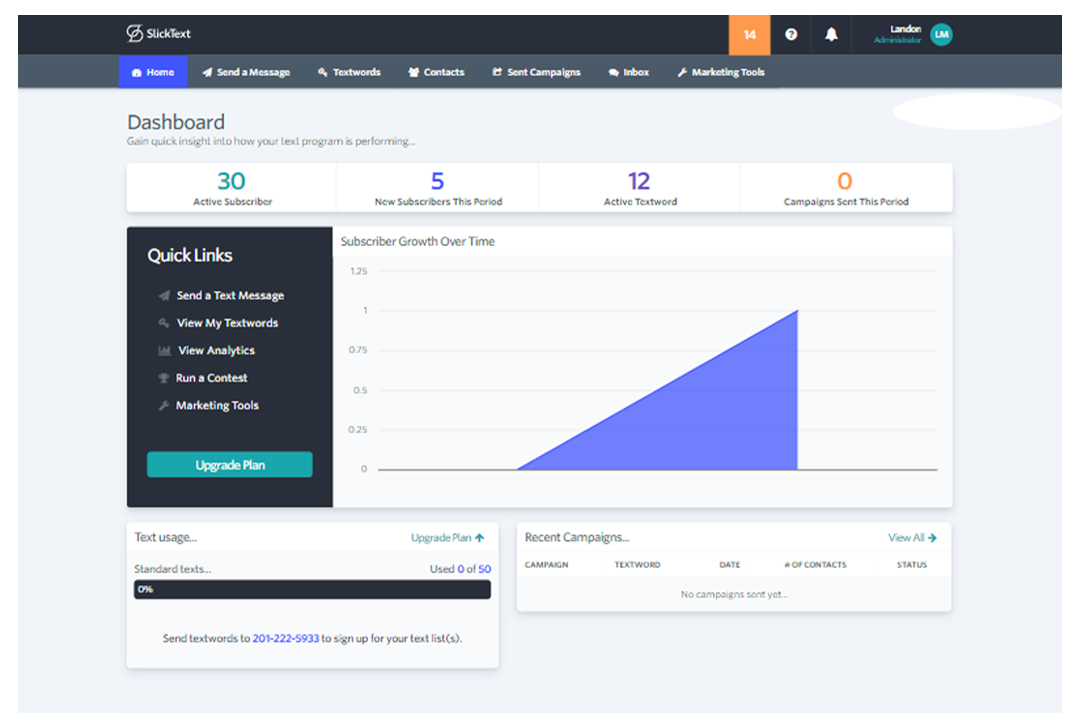
SlickText is another standard, out-of-the-box SMS platform that offers the full range of SMS automation capabilities.
It has an automated multi-branch option that automatically triggers messaging flows.
Pricing: Starts at $24.17/mo for 6,000 messages per year with numerous tiers that scale as message usage scales
What Should You Look for in Automated Texting Software?
The short answer to the above question would be: you should look for an automated texting software that makes your life and business easier.
But if you’d like an in-depth reply, here are a few non-negotiables your next text message system should include if you want it to save time, reduce headaches, and deliver results...
User-Friendly
Look for software with an intuitive dashboard that's easy to navigate, even for non-technical users.
You don’t want to have to spend any more time than necessary figuring out how to get things set up and navigating the online software.
Ready and Willing Support
Every service claims to have good support.
But how good is their support really? How easy is it to chat with them when a question or issue comes up? How long does it take to hear back when you submit an inquiry? How helpful are the support agents?
A software’s support team can make or break your experience with the business.
Pricing that Fits Your Budget
It’s important to be realistic about the costs associated with an automated texting software—due particularly to the back end fees that come along with sending out text messages on an A2P scale, it’s more than you probably expect.
You’ll therefore need to find a software with upfront costs that fit into your designated budget.
(Note that a lot of SMS software charge additional mobile carrier fees or phone number fees on top of their advertised subscription fees, so make sure to get clarity on pricing before you move forward with a particular software.)
How Automated Texting Software Works
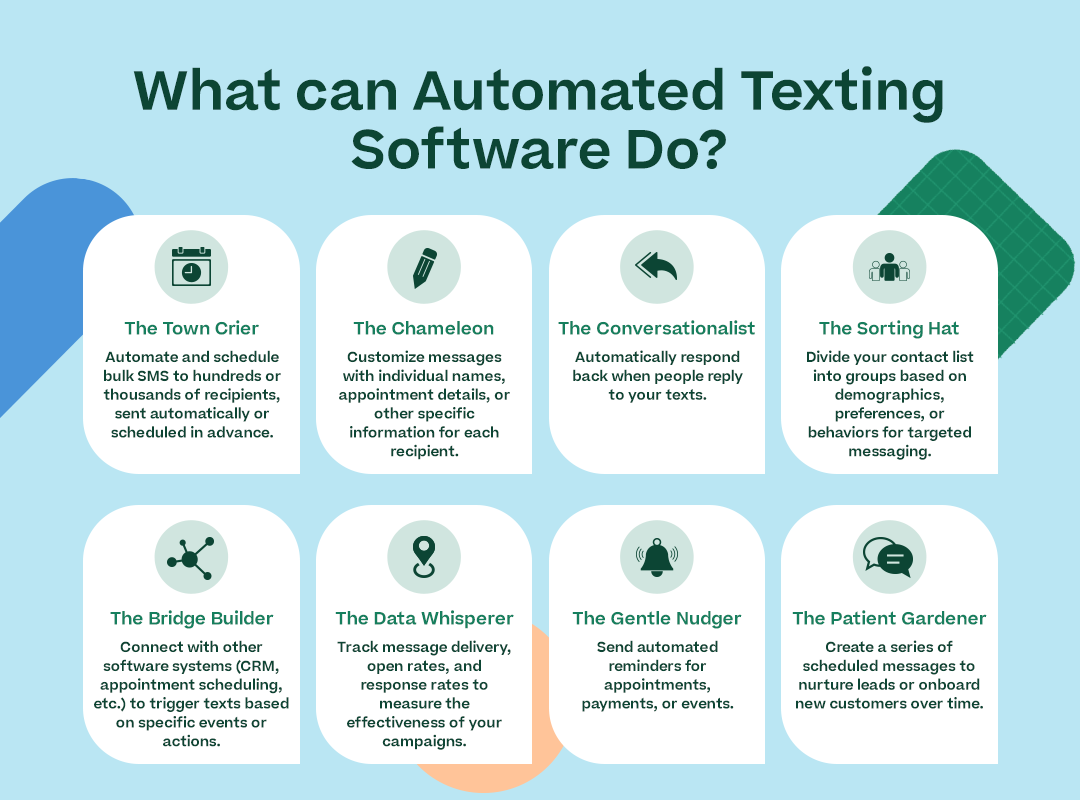
Automated texting software is pretty simple: it handles the heavy lifting of sending, scheduling, and managing your text messages so you don’t have to.
It’s a behind-the-scenes assistant that makes sure the right message goes to the right person at exactly the right time.
Features and Capabilities
So what does automated texting software actually look like in practice?
Here are a few essentials that any solid system should bring to the table if you want it to save time, reduce headaches, and actually deliver results:
- Bulk sending: Send bulk SMS to hundreds (or thousands) of people, instantly or scheduled for later.
- Personalization: Personalize every message with names, appointment details, or other info so it feels one-to-one, not copy-paste.
- Auto-replies: Automatically reply when people text you back, keeping the conversation alive without manual effort.
- Segmentation: Segment your list by demographics, interests, or behaviors so each group hears what’s relevant to them.
- CRM sync: Sync with your CRM, scheduling software, or other tools so texts trigger automatically when certain events happen.
- Reporting: Track delivery, engagement, and responses so you know what’s working (and what’s not).
- Reminders: Send timely reminders about appointments, payments, or events without sounding pushy.
- Drip campaigns: Build drip campaigns that nurture leads or onboard new customers step by step.
The bottom line is that automated texting software allows you to create and automate the text messages you’d like to send via an online dashboard.
(You can also use Mobile Text Alerts SMS API to accomplish this kind of automation.)
How to Send SMS via Automated Texting Software?
Worried that learning how to send SMS via automated texting software will be complicated or time-consuming?
Don’t be. The whole point of these platforms is to make messaging easier, not harder.
Here’s a simple step-by-step guide to get you started.
(And if you’re looking for how to schedule texts directly from your phone instead, check out these quick instructions for iPhone and Android.)
Step 1: Create an Account
You’ll first need an account with an SMS platform.
Setting up an account is as simple as filling out a short online form.
And if you’re not ready to shell out some cash for a full paid account, you can always get a free trial. That will allow you to test things out and get a feel for how it all works.
Step 2: Plan Out Your Messages
Once you’re up and running on an SMS platform, you’re ready to start planning out the messages you’re going to be sending through your automated text message system.
Maybe you’ll be sending a specific promotion to a subset of your leads.
Maybe you’ll be sending an announcement of an upcoming release to current customers.
Maybe you’ll be sending a series of onboarding messages to new customers.
Whatever the case, you can start thinking about specific aspects of your campaign:
- Who will receive your messages?
- How many messages will you send?
- What will be your primary call to action for your campaign? For each individual message?
Need an example? Get a free SMS drip campaign template here [Google Spreadsheet].
Nothing is set in stone during this planning phase, so you can always change your mind later.
You also don’t need to have everything figured out before you move forward, although it’s good to have a general idea of what you’re going to do.
Step 3: Schedule / Create Your Messages
You can start setting up or scheduling messages as soon as you know what content you want to include in the first message you’d like to send.
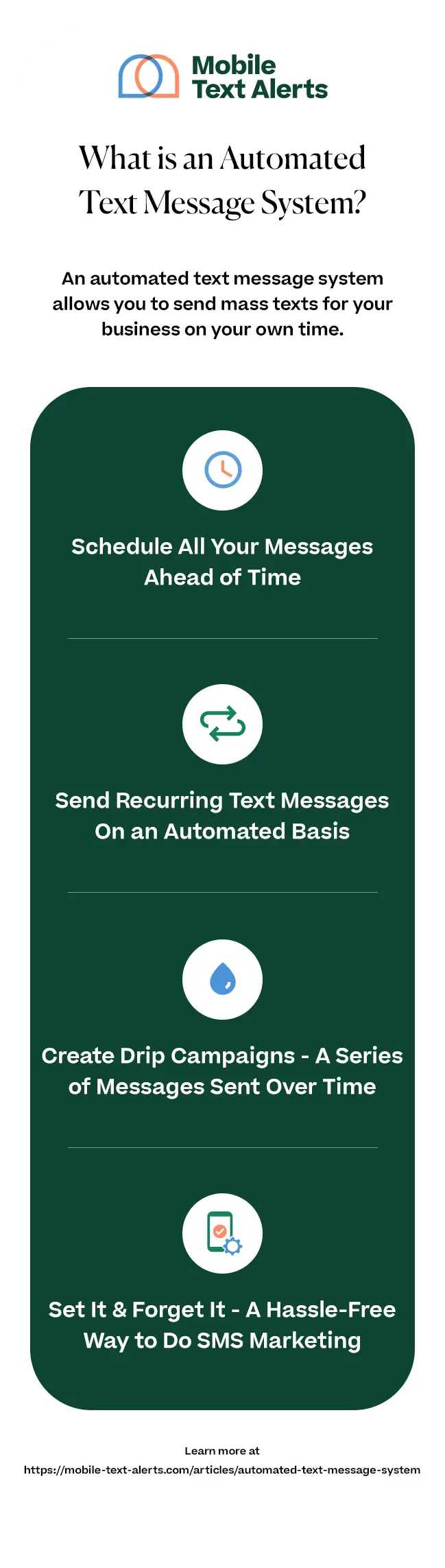
There are 3 ways to schedule / create your messages.
Schedule for a Specific Date and Time
You can schedule your messages for a particular date or time.
You can even schedule subsequent recurring text messages by selecting for your text to go out on the same day or time at regular intervals (such as monthly, weekly, or daily).
Schedule a Drip Campaign
Perhaps you want to automate a campaign but not specify the particular date that you’d like the messages to go out.
For example, let’s say you want to create an onboarding campaign for new trial accounts and send them a series of automated texts to help them get started.
In a case like that, you can use a drip campaign option.
You can simply set up all the messages you’d like your audience to receive, and designate how long of a delay you’d like in between each message.
Then customers or leads can be added to your campaign’s message flow automatically as soon as they sign up for your texts, or as soon as you add them to a designated list.
Designate the Conditions that Trigger the Automated Message (Workflows)
If you’re not wanting to do a scheduled blast or a drip campaign, you can create single automated message workflows triggered based on your subscriber’s activity.
You can set up and customize these auto-responses within your online SMS platform.
Step 4: Build Your SMS List
Once you have your messages set up and ready to go, all that’s left to do is to get people loaded into your overall SMS list so that they can receive those messages!
Some tools that can help you build your SMS list so that you can send automated texts include:
- “Text to join” words: These allow people to automatically join your SMS list by texting in a particular word to your account’s free phone number
- An online sign-up page: This is an online form that your leads and customers can fill out in order to sign up for your texts
- QR codes: People can join your text list by scanning an automatically generated QR code
- Integrations: You can automate with CRM software and other management services via an SMS API or via the integration site Zapier
Ways to Use Automated Texting Software (Examples)
Most automated texting falls into a handful of patterns. Here are some common uses and example triggers for each one:
| Use case | What triggers it | Example message |
|---|---|---|
| Appointment reminder | 24 hours before the scheduled time | Reminder: your appointment is tomorrow at 1:15pm. Reply C to confirm or R to reschedule. |
| Event reminder | 3 hours before start | Don't forget our webinar today at 3pm. Join here: [link] |
| Onboarding drip | Immediately after signup, then day 3 and day 7 | Thanks for creating an account! Finish setting up your profile: [link] |
| Scheduled promotion | Set date and time | Text club exclusive: 15% off your next purchase. Just show this text at checkout. |
| Lead follow-up | 48 hours after a demo request with no booking | Still want to see the platform? Here's the scheduling link: [link] |
| Cart recovery | 1 hour after checkout is abandoned | Left something behind? Your cart is still saved: [link] |
| Closure or emergency update | Sent manually, to a saved list | Offices are closed today due to inclement weather. Stay home and stay safe. |
| Internal shift or meeting reminder | 1 hour before start | Reminder: team meeting at 2pm. Zoom link: [link] |
| Keyword auto-reply | Subscriber texts a keyword | Reply HOURS, PROMOS, or SUPPORT and we'll send details. |
| After-hours auto-response | Inbound text outside business hours | Thanks for reaching out! We're closed but will reply first thing tomorrow. |
| Recurring update | Same day and time each week | This week's lunch special: chicken salad sandwich. Come enjoy. |
For more examples, see our sample text messages for customers.
Why Should You Use Automated Texting Software?
Below are some examples of common campaigns, what they accomplish, and the direct benefits to your operations and revenue. You can use these examples to map an SMS campaign you can automate this week.
- Appointment reminders: Reduce no-shows and administrative calls by sending a 24-hour reminder and a one-hour confirmation.
- Cart recovery and promotions: Trigger a message when a user abandons checkout, then follow up with a discount or urgency message.
- Onboarding sequences: Automate an onboarding drip to guide new users through activation steps, reduce churn in the first 30 days, and increase product adoption.
- Event and shift coordination: Send automated shift reminders, last-minute shift swaps, or event alerts to save administrative time and understaffing issues.
You can set up most of these types of automations with user-friendly SMS platforms, Zapier workflows, or SMS APIs.
What Potential Concerns Are There with Automated Text Messages?
Although automated texting is basically a no-brainer, there are a few potential concerns to think about to make sure you’re doing it effectively…
Lack of Human Touch
According to Zendesk, “3 in 4 consumers will spend more with businesses that provide a good CX.”
So customer service is important!
And while effective and efficient, an automated message typically just can’t beat the touch of an actual human interaction.
Even if you automatically personalize the messages with the recipient’s name and personal details, the bottom line is that the interaction is not organic, lacking the spark and personality of a human touch and not allowing for an engaging back-and-forth.
To combat this, make sure the tone of your automated messages is spot on and try to make bandwidth to engage in personal interactions as well.
Psychology: Not Feeling Like a “Person”
Piggybacking on that last point—while it’s often better than not having an interaction at all, being on the receiving end of automated messages can leave someone with the sense of feeling more like a number than a person.
In other words, automation, especially if implemented coldly and mechanically, can make someone feel like a cog in a machine.
As mentioned above, the best way to combat this is to nail down the tone you’re going for and make an effort to couple your automated messages with personal interactions whenever possible.
Annoyance in Regards to Dealing with a “Robot”
Still along the same lines as the last 2 points, be aware that interacting with a “robot” rather than a human is a frustrating experience for many.
We’ve all experienced it—pushing button after button through automated phone menus before getting to speak to a real person. And now with AI it’s even more important than ever!
So do your best to make your automated text message experience as non-frustrating as possible. One way to do that would be to not make your recipients have to go through a lot of hassle if they want to speak to a real person—make it easy for them to patch through to a real rep.
Do You Need Carrier Registration to Send Automated Texts?
Regulatory compliance and carrier deliverability determine whether your automated messages actually reach customers.
Before you send a single message, get clear consent from your recipients.
You'll need to register your brand with the mobile carriers or else they’ll likely block your messages. The Mobile Text Alerts support team can walk you through the registration process and review templates before you launch so you avoid early rejections or carrier filtering.
How Much Does It Cost? Calculate Your SMS Budget
Shopping for an auto texting program means translating subscriber counts and message frequency into a monthly dollar figure.
You can use the simple rules below to estimate costs and pick the plan that avoids surprises.
(The examples reference common plan tiers so you can compare against your projected usage.)
- Estimate audience size and activity: Multiply the number of active subscribers by estimated messages per month to get raw message volume. For example, 5,000 contacts receiving two messages per month equals 10,000 sends.
- Account for message length: Messages over 160 characters count as multiple sends
- Include MMS and multimedia: Picture messages count as 3 messages and therefore cost more. Reserve MMS for high-impact campaigns.
- Plan for growth and overages: Pick a plan that gives headroom for list growth. Upgrading mid-month should be straightforward; check how the provider handles prorated upgrades.
- Compare starting tiers: A low-cost starter plan should let you run meaningful tests. For reference, entry plans can start around $20 per month with limited sends, while business tiers scale to tens of thousands (or millions) of messages with discounted per-message rates. Use a free trial or a one-month pilot to test.
How to Measure ROI from Your Automated Messaging System
Knowing which numbers to track converts an experimental campaign into a repeatable growth channel.
Some metrics you could start with include delivery rate, click-through rate (or reply rate), conversion rate (if applicable), revenue per conversion, and opt-out rate.
- Delivery rate: shows whether carriers accept your traffic.
- Click-through rate: demonstrates engagement with links or CTAs. Alternatively, if your CTA is replies, you can track reply rate instead.
- Conversion rate: ties messages to business outcomes, like bookings or purchases.
- Revenue per conversion: gives you a dollar value to compare against cost per message.
- Opt-out rate: signals message frequency or relevance issues you should fix quickly (or lack of clarity in regard to expectations with the opt-in process).
If you don’t have a marketing or sales-oriented use case, then conversions may not necessarily be a relevant metric. So you’ll need to track outcomes some other way which will depend on your goals.
In some cases the outcomes may not be directly attributable to SMS, but you can still track for correlations (for example, if your use case is appointment reminders, a correlation outcome to track might be fewer no-shows).
Your own benchmarks for these different metrics may vary, but we can give you an example for delivery rate to help you get started.
We did an analysis of our own user base across 28,933,336 messages sent between August 10, 2026 and September 9, 2026 and evaluated the percentage that returned a delivered status.
The result revealed a 92.3% delivery rate. (Note, however, that not all successful messages return a delivered status. The actual delivery rate may be higher.)
A good starting point for you, therefore, may be to expect a 92% delivery rate for your SMS.
How Fast Can You Set Up Automated Texting?
Some may worry that an automated texting program will be technical and slow to start.
Here’s how you can go live in as little as 60 minutes:
1. Sign up and register your brand
Create an account and verify your business details so carriers will trust your traffic. It will technically take a few business days for the carriers to approve your brand, but in the meantime you’ll be able to send from pre-approved numbers.
2. Import contacts with segment lists
Upload contacts with starter segments such as “New signups,” “Active customers,” and “Local leads” to send targeted messages.
3. Schedule a test, then activate automation or drip flows
Send tests to internal numbers to see how everything comes through.
Then you can schedule messages or create an automated workflow.
4. Monitor delivery metrics and iterate
You may want to keep an eye on delivery rates, reply volume, and unsubscribe rates so you can iterate on your messages.
Try Automated Texting Software Now
In this age of busyness and technology, you need tools that are effective for your business.
Effective, but not difficult!
Automated texts give you the amazing benefits of SMS - high read rate, visibility, and responsiveness - and don’t require you to hover and micro-manage.
Thus, you can release some stress in your life, increasing sales and leaving you happier with your marketing efforts.
What are you waiting for?
Automated Text Message System FAQs
How much does automated texting software cost?
How can I use automated texting software?
Is automated texting software hard to set up?
How do I set up an auto texting program for my small business?
Can an auto texting program send appointment reminders and recurring messages?
What features should I look for when choosing an auto texting program?
How are text messages counted and how will that affect my plan?
Can I integrate automated texting with my CRM, Zapier, or API?
Author Bio

Sam Pelton is the content director for Mobile Text Alerts, an SMS service that gives businesses an easier way to reach customers and audiences. He has 12 years of experience working with the texting platform in the areas of customer support, quality assurance testing, content creation, copywriting, and marketing strategy. He’s also a father of 6 and loves a good (bad) dad joke. Connect with him on LinkedIn.