



Explore this content with AI:
Last year, I tested seven SMS providers for a retail client launching time-sensitive flash sales.
The results surprised me. Identical messages, sent simultaneously, had wildly different delivery rates. Some arrived in seconds; others took minutes. Some never arrived at all.
That's when I realized most businesses are choosing SMS providers blind.
Three factors matter most when you choose an SMS API provider: reliability, coverage, and how easy it is to use.
This article reviews seven of the most reliable SMS API platforms for 2026: Mobile Text Alerts, Twilio, Sinch, MessageBird, Telnyx, Plivo, ClickSend, and Infobip.
Basic editorial updates were submitted 7/29/26. Check with vendors to confirm current information.
SMS API Comparison: 8 Most Reliable SMS API Providers
See how these providers stack up on the factors that matter most: delivery reliability, global coverage, compliance support, and pricing.
| Provider | Best For | Global Coverage | Key Strength | Typical Pricing |
|---|---|---|---|---|
| Mobile Text Alerts | Businesses seeking simplicity | 190+ countries | User-friendly interface | Starts at $20/month |
| Twilio | Developers & enterprises | 190+ countries | Flexibility & scale | ~$0.0083/SMS |
| Sinch | Enterprise reliability | Global | Real-time monitoring | Enterprise pricing |
| MessageBird | International reach | 225+ carriers | Direct connectivity | Enterprise pricing |
| Telnyx | Technical control | Global | Private IP network | ~$0.004/SMS |
| Plivo | 2FA & security | 190+ countries | Compliance focus | Variable by region |
| ClickSend | Managed gateway | Global | 99.95% uptime guarantee | ~$0.0226/SMS |
| Infobip | High-volume campaigns | Global | Advanced analytics | Pay-as-you-go |
How I'm defining 'reliable'
An SMS API provider is reliable if you can count on it to deliver messages consistently - and can see what happened to your message and get help when it doesn't work.
No provider will deliver messages 100% of the time because there are so many factors involved in delivery, many of which are outside of a provider's control (invalid numbers, lack of SMS compliance on the part of the user, etc.).
But a reliable provider won't regularly surface delivery issues that are the result of their own failures, and will give you insight and assistance to troubleshoot when issues occur.
Mobile Text Alerts: Easy SMS
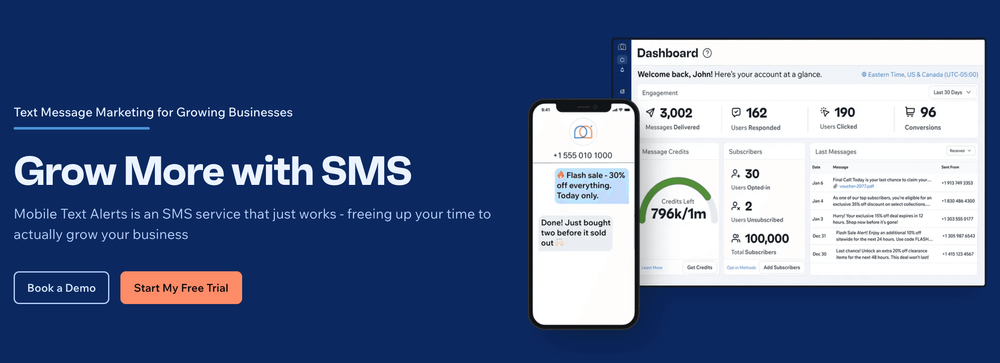
Mobile Text Alerts makes SMS simple and reliable for businesses. You get immediate results and dependable performance without needing developers or complex setup.
Mobile Text Alerts gets you started fast. Businesses can send their first messages within minutes of setup. This matters for retail businesses launching time-sensitive promotions, ecommerce order confirmations, and appointment reminders. The platform offers short links, images, and personalized fields for targeted campaigns.
Need to connect with your existing systems? The Mobile Text Alerts API integrates smoothly with business tools to automate messages, send alerts, and track subscribers. You can trigger messages from events in your CRM or ecommerce platform without dealing with complex code.
This makes Mobile Text Alerts ideal for businesses that want enterprise features without the complexity.
Mobile Text Alerts provides fast customer support to resolve any issues quickly. This matters for industries like construction, logistics, and healthcare where SMS is critical but not the main technical focus. The combination of reliability, ease of use, and support makes it a strong choice.
It offers the unique feature of iMessage delivery via the API as well.
Pricing starts at $20/month annually or $25 monthly.
You can also get a 14-day free trial.
Pros
- Simple, intuitive interface that non-technical users can learn quickly
- Fast setup — businesses can send their first message within minutes
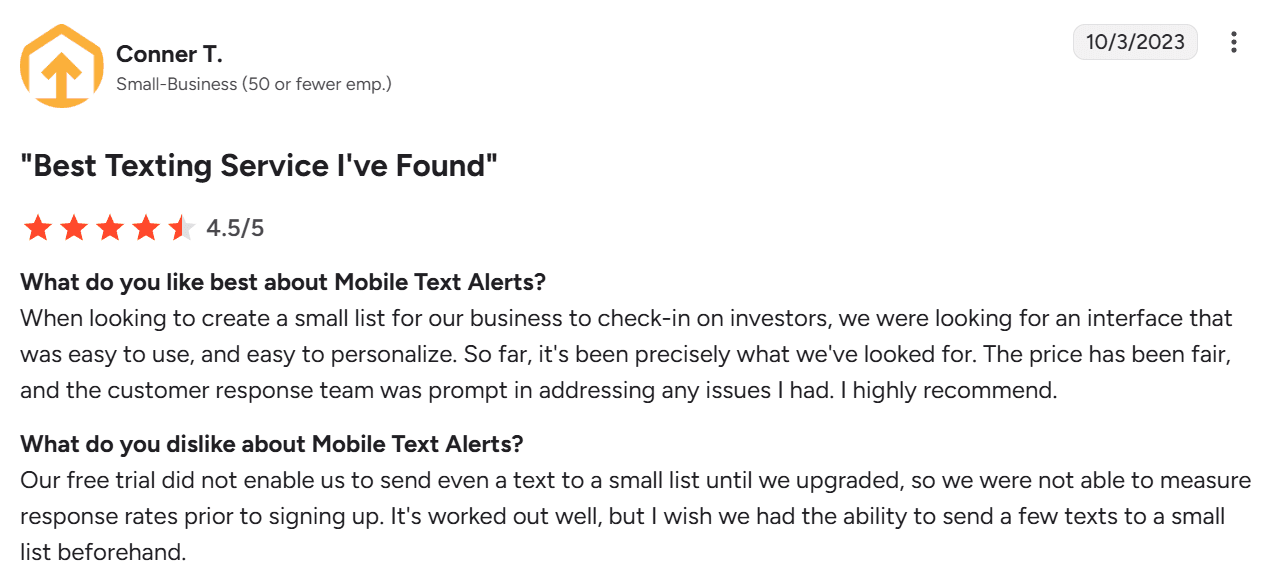
- Responsive customer support, consistently praised in user reviews
Cons
- Limited direct third-party integrations compared to larger platforms
- User-facing platform can feel basic for non-technical users needing advanced functionality
Reviews
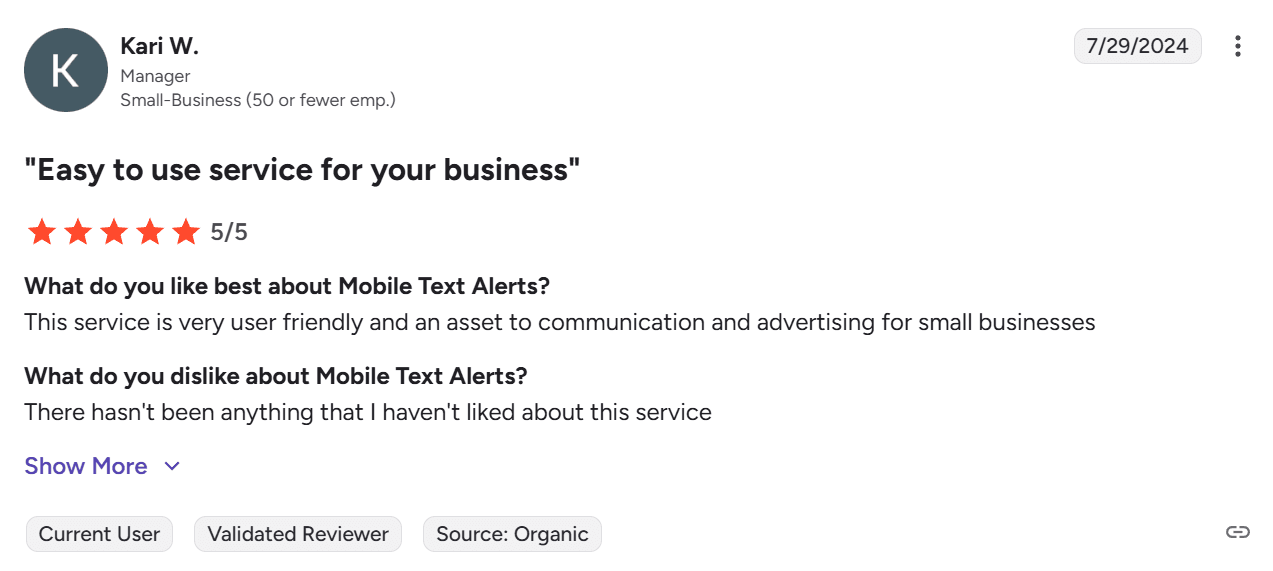
G2 rating: 4.5 out of 5 (71 reviews)
Twilio: The Developer-Friendly Giant
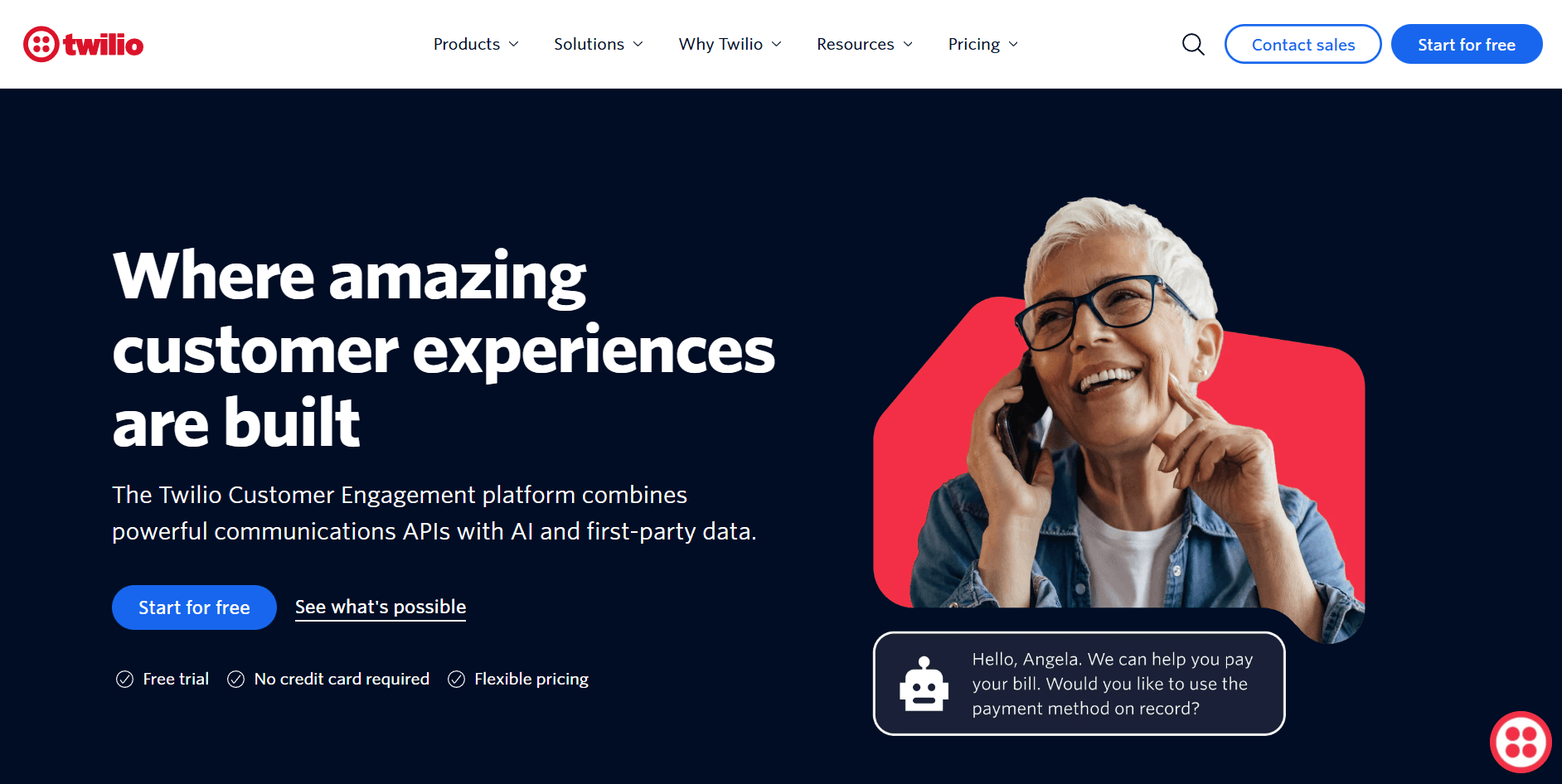
Twilio is the go-to choice for developers who need flexibility and international coverage. The platform's reach spans over 190 countries and supports multiple messaging channels including SMS, MMS, and WhatsApp.
Twilio's API lets businesses send and receive messages worldwide for notifications, transactions, and authentication. One standout feature is Studio, a low-code tool that lets teams design messaging flows visually without extensive coding.
Twilio operates on transparent pay-as-you-go pricing, currently around $0.0083 per message for US SMS. The platform includes compliance tools for regulations like 10DLC registration. Real-time webhooks and delivery tracking give complete visibility into message status.
Twilio sets the standard for flexibility, documentation, and pre-built integrations. Over [402,000 companies (according to data from 2025)] built on the platform, making it the most widely adopted SMS API available.
Pros
- Highly flexible API with extensive documentation trusted by over 335,000 companies and 10 million developers
- Wide channel support: SMS, MMS, WhatsApp, voice, and email from one platform
- Scales reliably for businesses of all sizes
Cons
- Pricing can escalate quickly at high volumes when carrier fees are factored in
- Advanced features have a steep learning curve for non-developers
- Premium support requires a minimum monthly spend threshold
Reviews
G2 rating: 4.1 out of 5 (529 reviews)
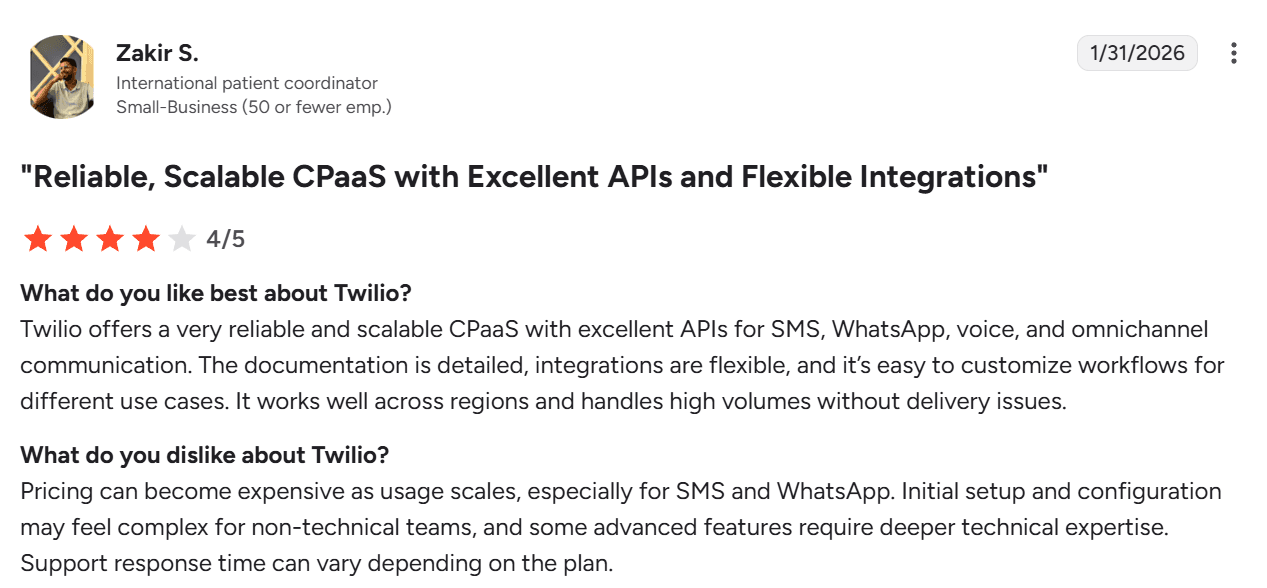
Sinch: Enterprise-Grade Performance
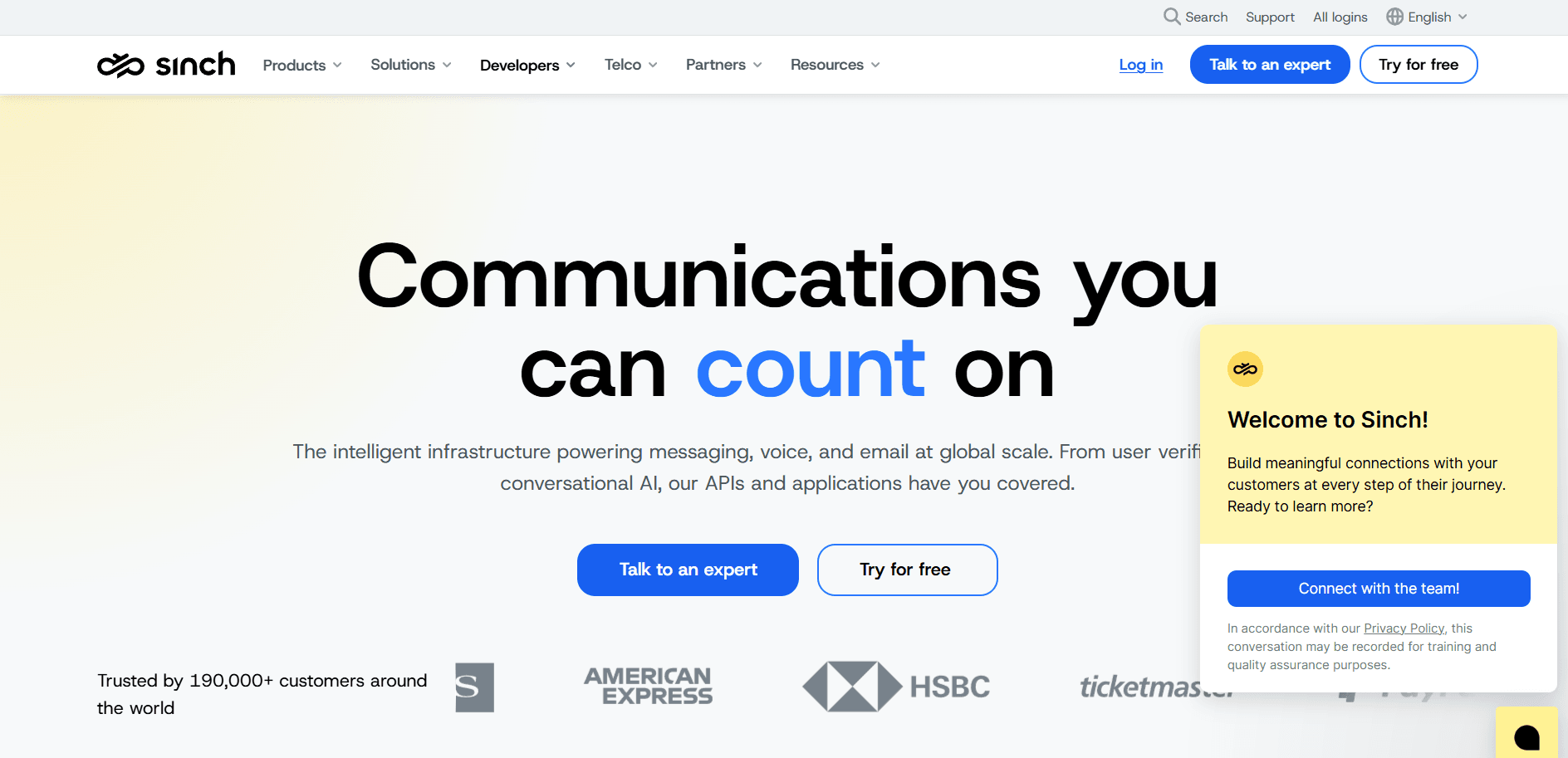
Sinch specializes in enterprise SMS delivery with real-time tracking and multichannel messaging. As a global communications provider, Sinch offers real-time delivery monitoring across SMS, voice, and video. The platform uses smart routing to automatically select the best delivery paths for high SMS success rates.
Sinch's core advantages are analytics and visibility. The platform provides detailed reports on campaign performance, delivery rates, and why messages fail. This visibility matters tremendously for regulated industries like healthcare and finance. Organizations in these sectors need detailed audit trails and compliance documentation.
For businesses requiring delivery tracking with SLA-backed performance guarantees Sinch is an excellent choice. Businesses pay enterprise pricing for this enterprise-grade reliability.
Pros
- Enterprise-grade reliability with SLA-backed performance guarantees
- Smart routing automatically selects the best delivery path in real time
- Strong analytics and audit trails suited to regulated industries
Cons
- Pricing is enterprise-level and not publicly listed, making budgeting harder
- Less suitable for small businesses or teams without technical resources
- Setup and onboarding can be complex compared to simpler platforms
Reviews
G2 rating: 3.8 out of 5 (35 reviews)
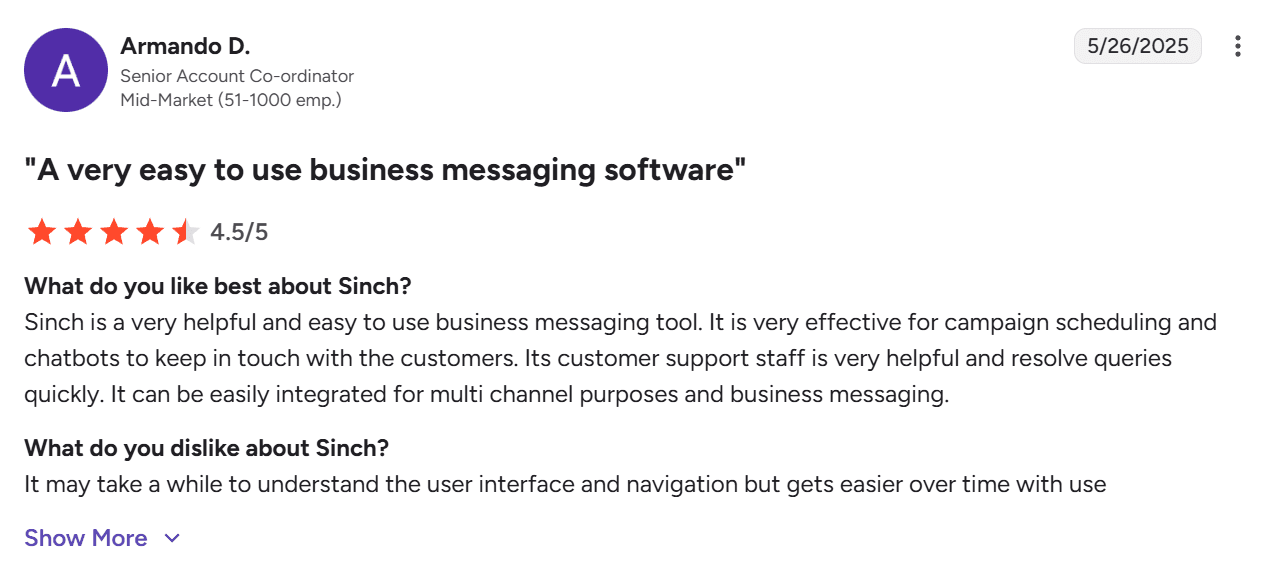
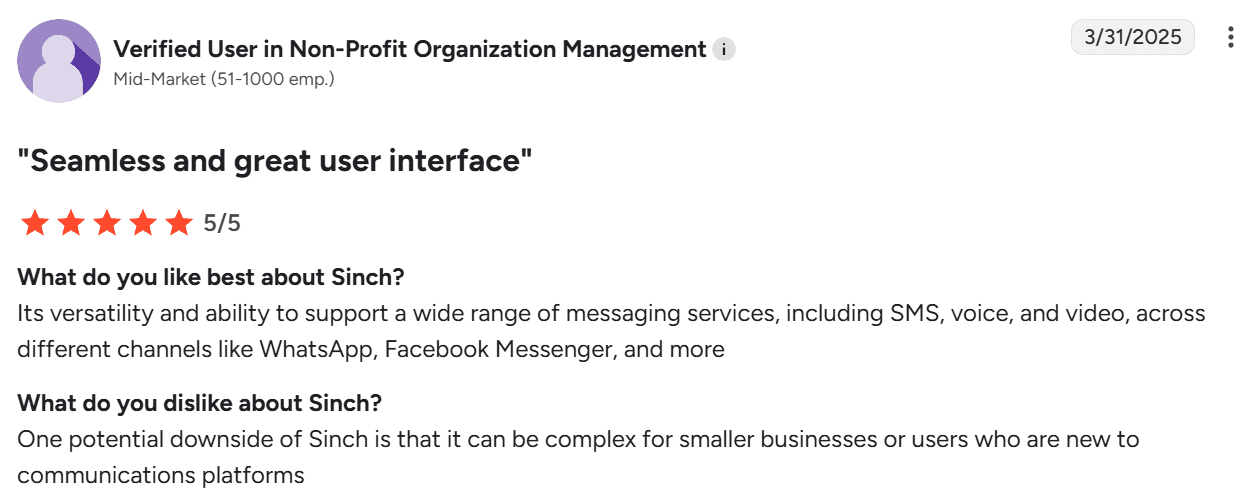
MessageBird: Global Carrier Connectivity
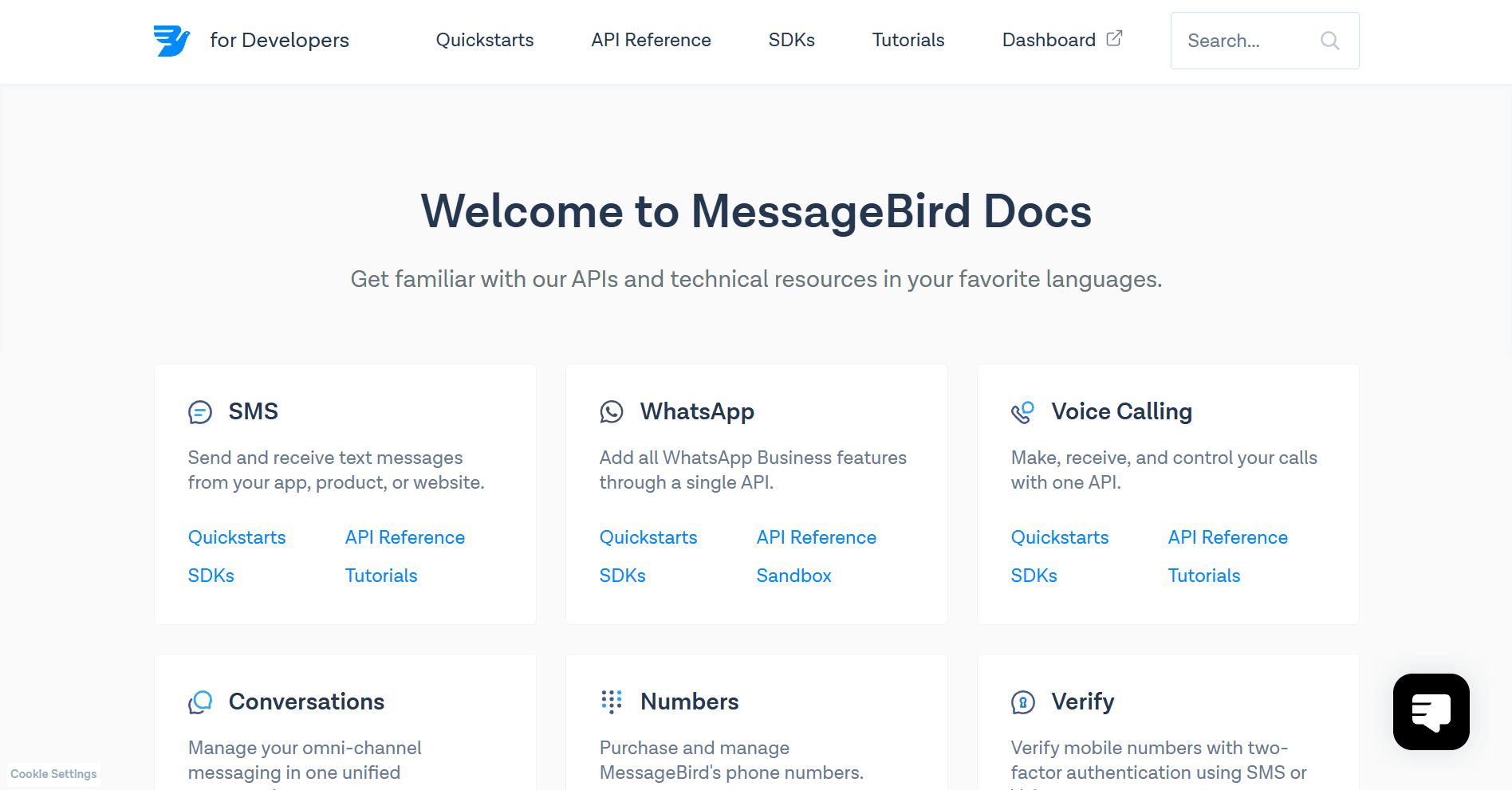
MessageBird, now operating under the Bird brand, has built its reputation on direct carrier connectivity and exceptionally broad global coverage. The platform connects to over 225 carriers worldwide. This enables wide country coverage and offers direct operator routes for reliable SMS delivery.
This broad carrier network allows businesses to send messages in hard-to-reach markets that many competitors don't serve well. Direct operator routes cut out the middlemen. Messages reach recipients faster with higher delivery success rates.
Beyond basic SMS, MessageBird offers multichannel messaging options and automation tools. The platform integrates with CRM systems and supports omnichannel communication flows.
Pros
- Direct connections to 225+ carriers enabling strong global reach
- Omnichannel inbox consolidates SMS, WhatsApp, email, and social messaging
- Integrates with CRM tools including Salesforce, Shopify, and WooCommerce
Cons
- Pricing is higher than many competitors, particularly for smaller volumes
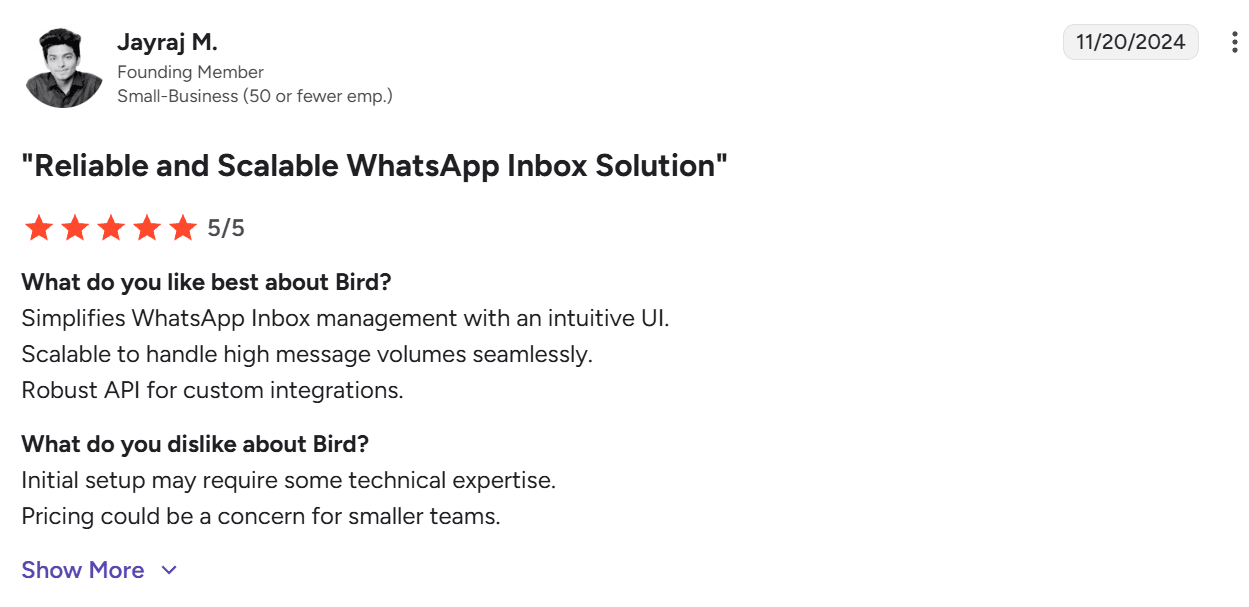
- Customer support has drawn criticism in user reviews for slow response times
- Enterprise pricing model lacks transparency for straightforward cost comparisons
Reviews
G2 rating: 3.9 out of 5 (73 reviews)
Telnyx: Technical Control and Value
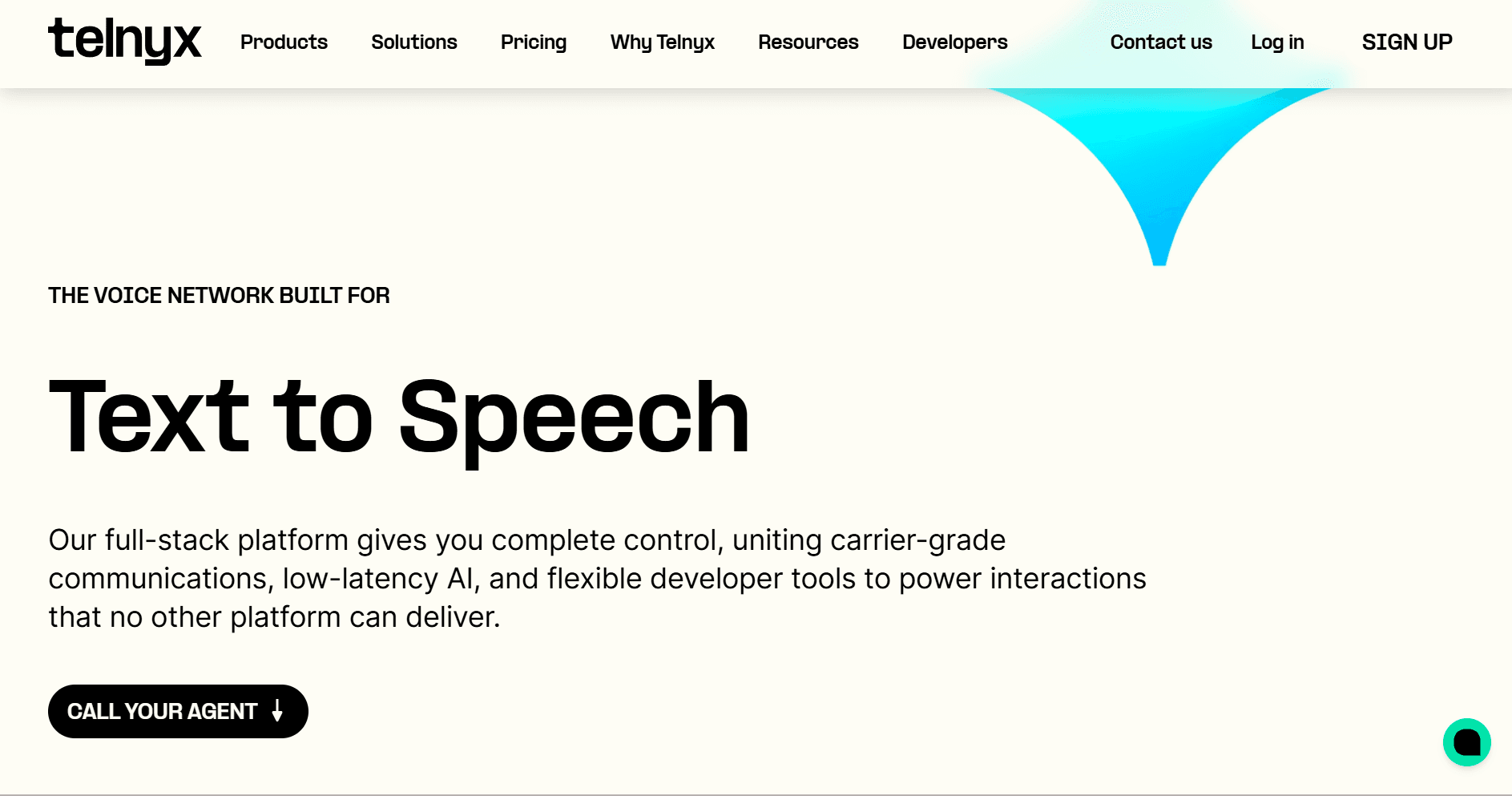
Telnyx appeals strongly to developer teams and engineering organizations that want granular control over their messaging infrastructure. The platform also offers highly competitive pricing. By operating its own global private IP network, the platform controls more of the delivery chain. This ensures reliable, low-latency message routing.
Telnyx provides number lookup capabilities, two-way SMS support, and multiple number type options including short codes and toll-free numbers. The platform also delivers detailed analytics and real-time reporting through webhooks.
Pricing is one of Telnyx's advantages. Current rates are around $0.004 per SMS for US outbound messages. This competitive pricing attracts high-volume senders and budget-conscious startups who still need quality infrastructure.
Pros
- Among the most competitive pricing available at ~$0.004 per US SMS
- Owns its private global IP network, giving it more control over delivery quality
- Free 24/7 support — a notable advantage over Twilio's paid support tiers
Cons
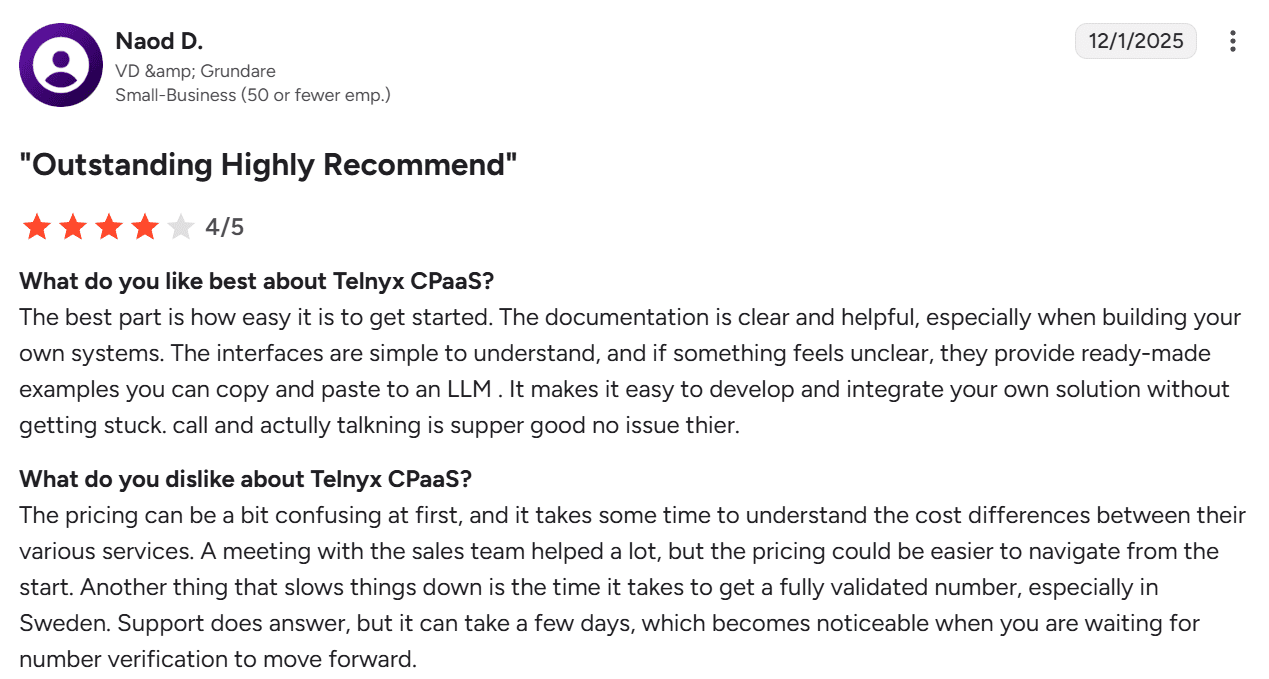
- Some users report delivery inconsistencies in certain international regions
- Advanced configuration can be difficult to navigate for less technical teams
- Bulk number management tools have room for improvement per user feedback
Reviews
G2 rating: 4.7 out of 5 (525 reviews)
Plivo: Compliance and Global Reach
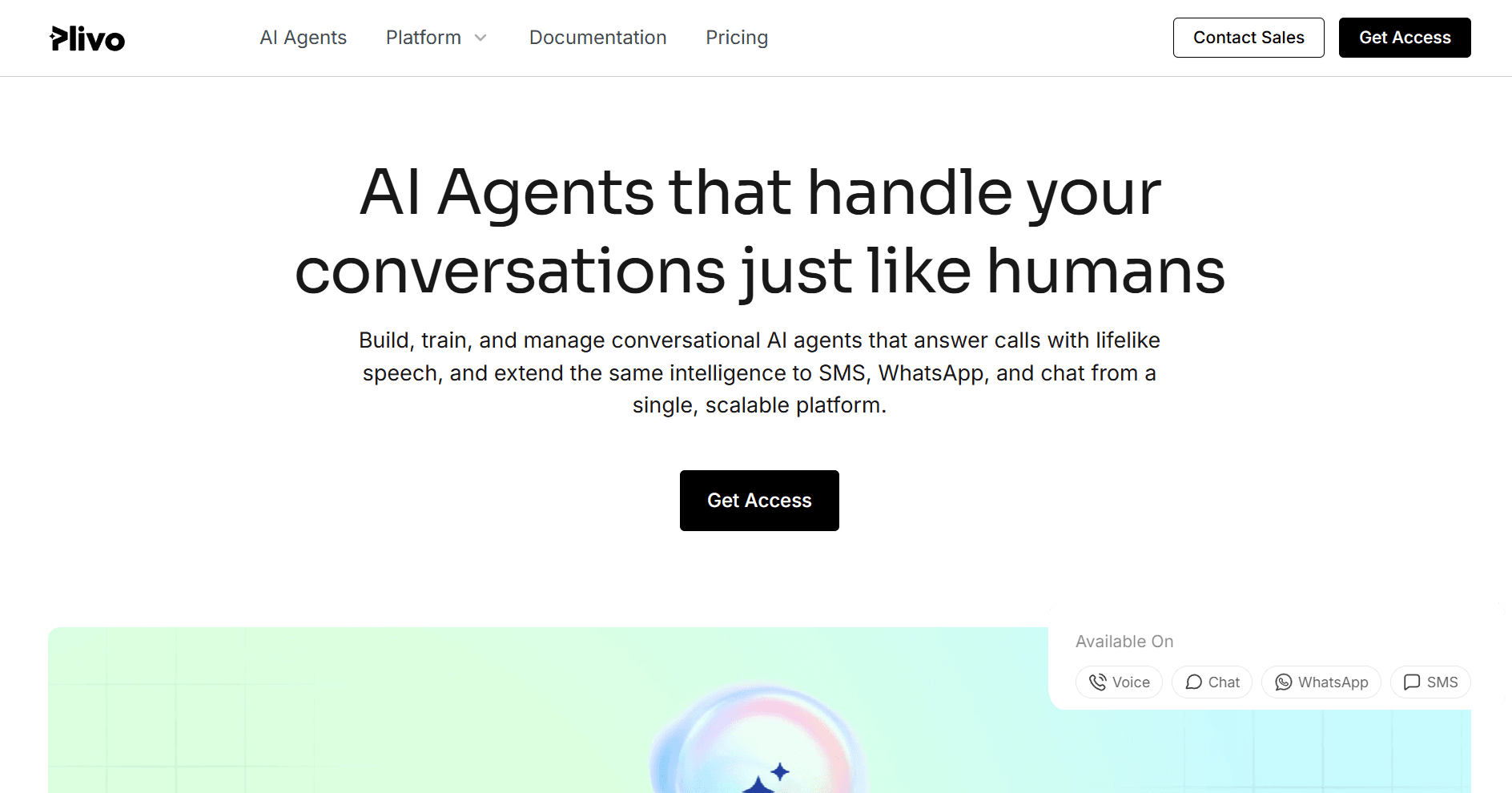
Plivo stands out for its cost efficiency, international reach, and strong compliance features. This makes it a smart choice for two-factor authentication, alerts, and transactional messaging.
The platform offers scalable SMS and voice API capabilities with broad coverage across 190+ countries. Plivo holds ISO 27001 compliance certification, demonstrating its commitment to security. This makes it well-suited for authentication and financial notifications.
For 2FA implementations specifically, Plivo provides purpose-built features that streamline verification workflows. The combination of global reach and security certifications makes it particularly attractive to fintech companies, healthcare providers, and other regulated industries.
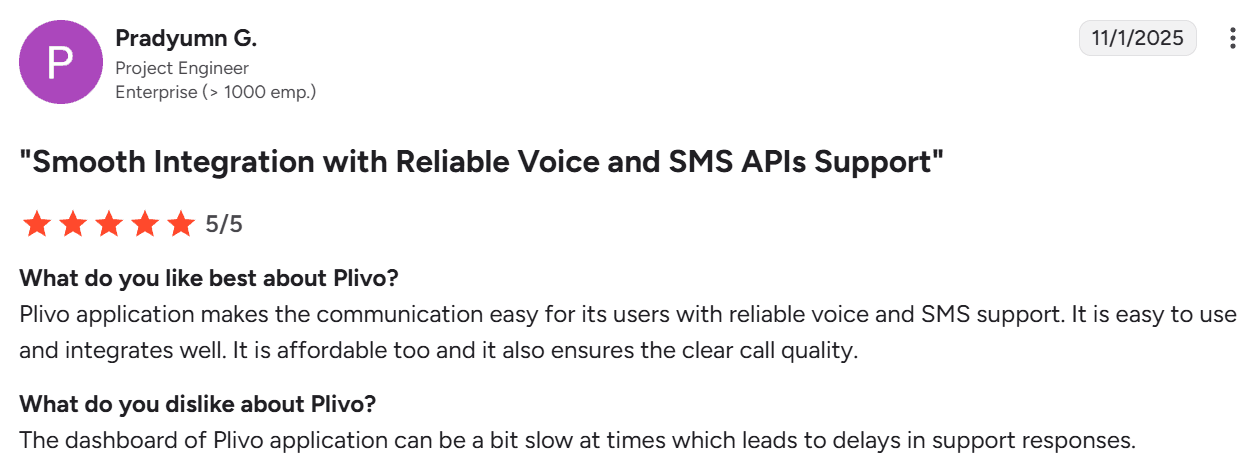
Pros
- ISO 27001 certified, making it one of the strongest compliance options available
- Broad coverage across 190+ countries with transparent per-region pricing
- Developer-friendly SDKs in multiple languages with straightforward documentation
Cons
- Fewer advanced features compared to Twilio and Sinch at the enterprise level
- Interface can feel confusing for non-technical users
- Smaller ecosystem of third-party integrations than larger competitors
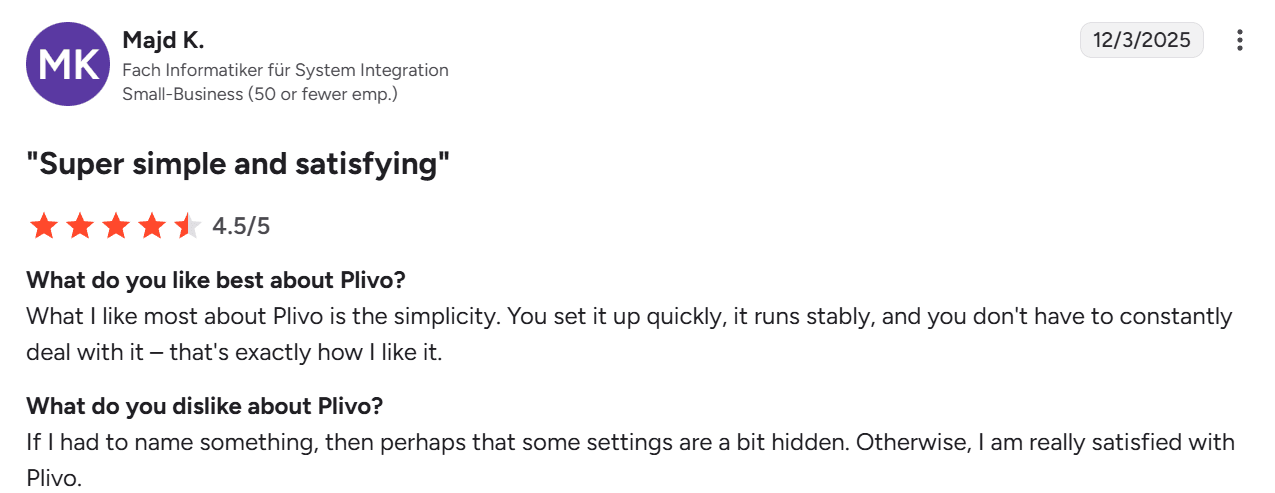
Reviews
G2 rating: 4.5 out of 5 (747 reviews)
ClickSend: Easy Setup with Strong Uptime
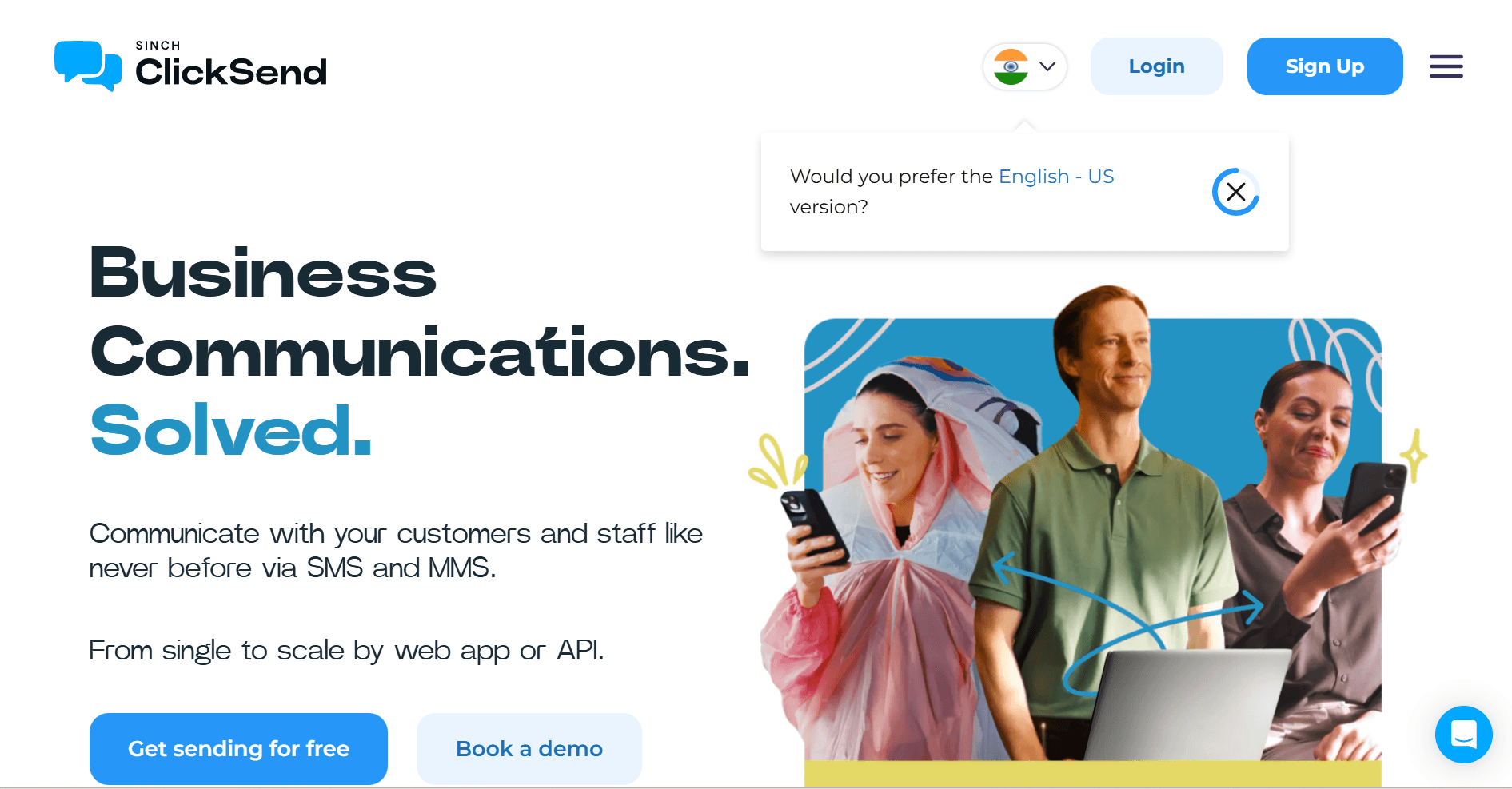
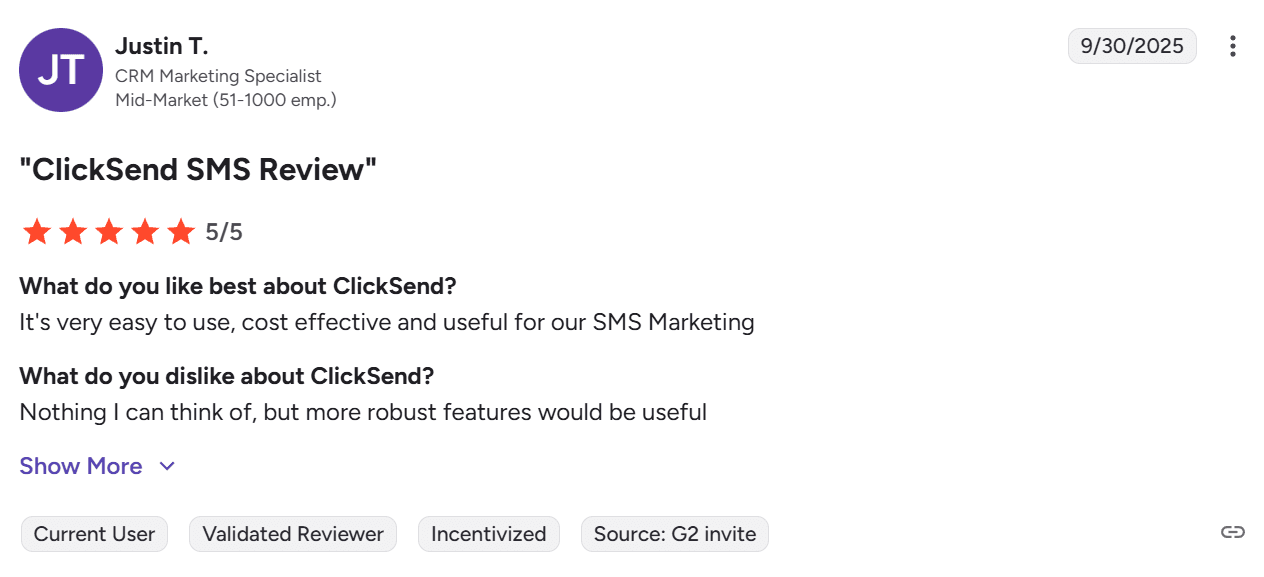
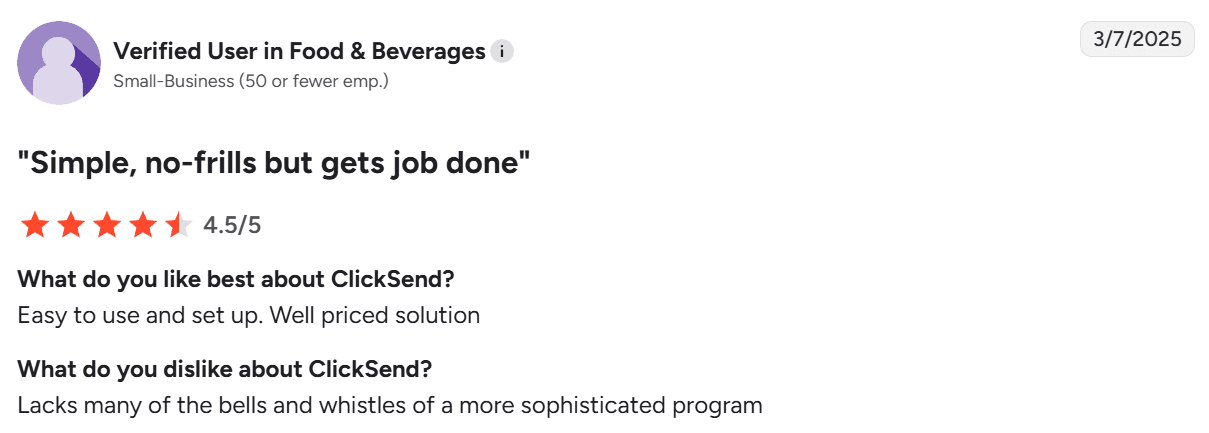
ClickSend offers an easy-to-use web application combined with robust API capabilities and strong reliability guarantees. The platform guarantees 99.95% uptime, ensuring your messages get through when you need them.
Users can send messages from email, schedule campaigns in advance, and exchange texts with customers. Starting at $0.0226 per message, ClickSend offers bulk discounts as volume increases. ClickSend works particularly well for teams that need API capabilities but prefer using a web dashboard for everyday tasks.
Pros
- Guaranteed 99.95% uptime SLA with 24/7 human support
- Email-to-SMS functionality reduces technical barriers for non-developer teams
- Simple web dashboard makes it accessible for everyday business users
Cons
- Starting price of ~$0.0226 per SMS is higher than API-first competitors like Telnyx
- Reporting dashboard can be slow to refresh according to some user reviews
- Less suited to high-volume technical use cases than developer-focused platforms
Reviews
G2 rating: 4.1 out of 5 (49 reviews)
Infobip: Analytics-Driven Scale
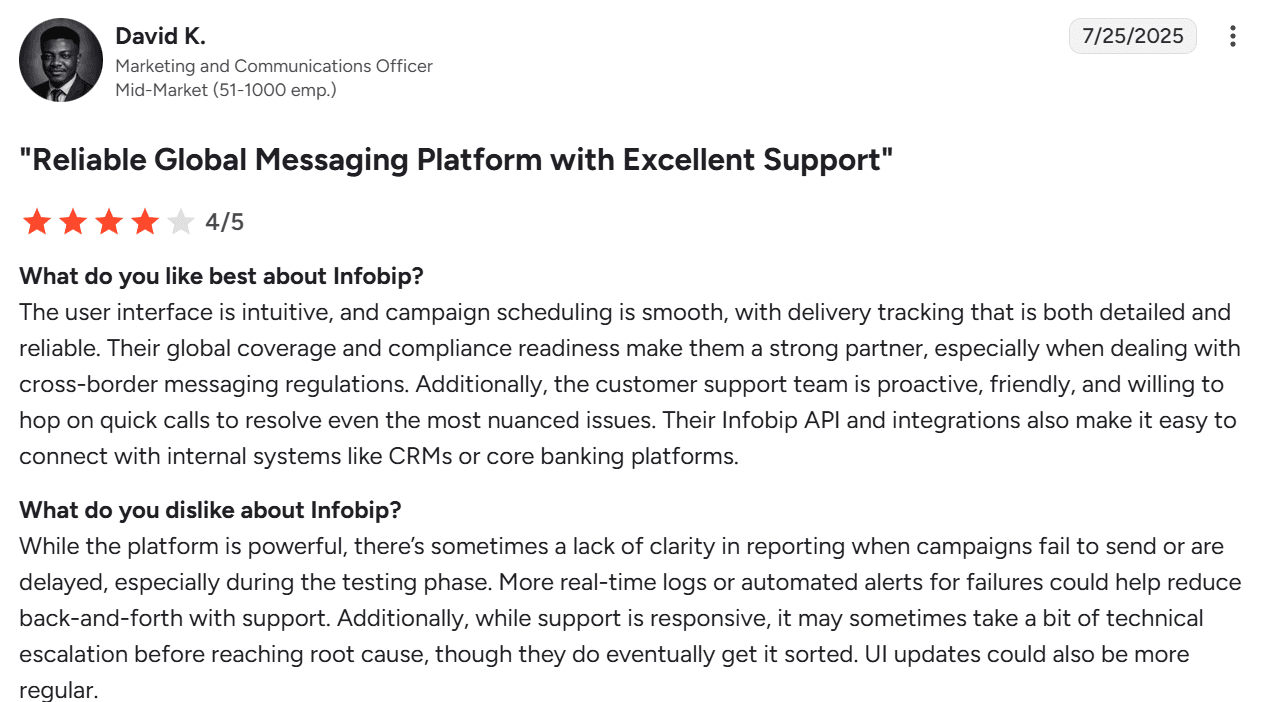
Infobip offers enterprise messaging with detailed analytics, global coverage, and flexible pricing for high-volume campaigns. The platform provides detailed analytics and campaign reporting to track messaging performance.
With access to real-time reporting, teams quickly identify delivery issues. Comprehensive routing and compliance controls ensure messages reach recipients reliably. Infobip is ideal for high-volume transactional and marketing campaigns that require global reach and detailed tracking.
Pros
- Deep campaign analytics and reporting give strong visibility into messaging performance
- Rated higher than Twilio on G2 for quality of support and community support
- Flexible pay-as-you-go pricing scales well for high-volume enterprise campaigns
Cons
- Pricing is less competitive for smaller businesses and lower volumes
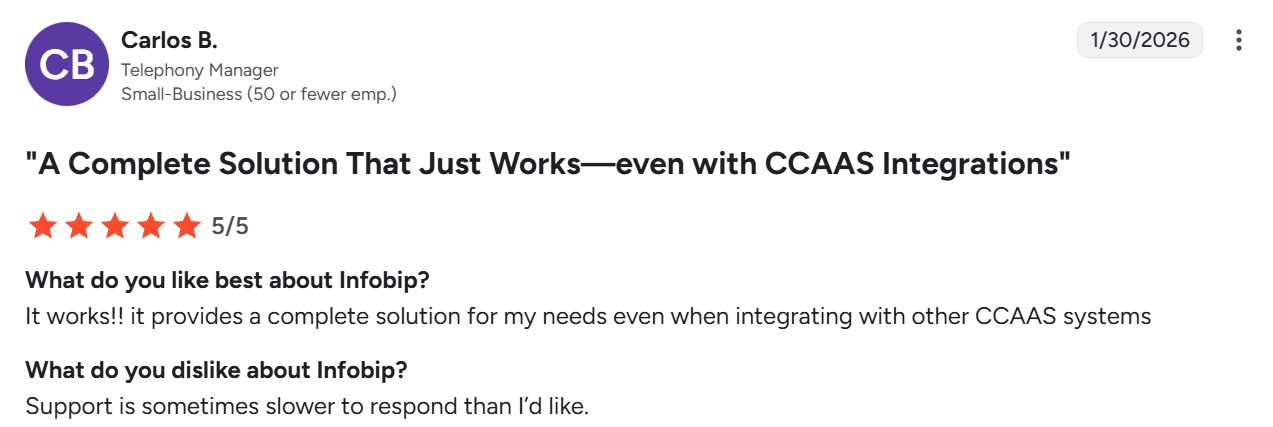
- Support response times have been flagged as slow in G2 reviews
- Platform complexity can be overkill for straightforward SMS use cases
Reviews
G2 rating: 4.3 out of 5
Choosing the Most Reliable SMS API Provider
The most reliable SMS API is the one that fits your specific situation. Small businesses get up and running fastest with Mobile Text Alerts and ClickSend. Twilio gives developers the control and customization they need. Require enterprise guarantees? Sinch and Infobip offer SLA-backed performance. Technical teams on a budget should look at Telnyx's competitive rates, while for compliance-heavy industries, Plivo delivers the security certifications you need.
There's no single 'best' SMS provider. The right choice depends on who you're texting, what you're trying to do, what you can afford, and how technical your team is.
Start by understanding your requirements, then test providers with pilot campaigns in your target markets. Choose the partner that consistently delivers messages when you need them to reach your customers.
Why Your Provider Matters Less than Your Registration and Compliance
Most major SMS API providers are generally reliable.
What matters more than choosing a provider is going through the A2P SMS registration process and comply with carrier regulations.
(This is different from the TCPA and state laws regarding SMS, although there is some overlap.)
We have found that you can typically get SMS registration processed in 10 days or less. If you use a toll-free number the timeline is typically 2–3 days, according to an analysis of 2,997 approved toll-free number registrations submitted by Mobile Text Alerts customers between December 12, 2023, and July 13, 2026.
Beyond filling out brand registration, SMS support specialist Aaron Butterfield identifies several principles you should follow to keep message delivery reliable
- Follow basic consent guidelines—for example, you should typically only text people who have agreed to receive messages from you, only send messages during waking hours, and include opt-out language in your messages.
- Identify your brand in your messages (preferably at the beginning)—make sure it’s clear to your audience who the messages are coming from.
- Be careful of "spammy" behavior—carriers may flag sending behavior that seems suspicious, like sending multiple messages to the same audience in a single day, including multiple links in your message, or sending high-pressure messages that try to get people to make a split-second decision
- Stick to your registered use case—when you submit your original brand registration, you’ll designate the use case you’ll be using texts for, so don’t go outside of this use case. If you need to expand or change your use case, you can always resubmit your registration.
- Avoid prohibited content—certain topics, for example, controlled substances, firearms, and adult content, are considered "taboo" for SMS and are either prohibited entirely or highly regulated (even if you have a legitimate use case). So avoid this type of content in your messages.
Try the Mobile Text Alerts SMS API for yourself with a 14-day free trial.
Frequently Asked Questions
Which SMS API has the highest delivery rate?
Why do my texts fail even with a reliable SMS API?
How long does it take to get approved to send SMS in the US?
What are common use cases for SMS APIs in business communication?
Author Bio
Nicole Braganza has been the Creative Lead over content and communications at Media.net since 2018. Before that, she was Creative Director at BC Web Wise and Associate Creative Director at Grey Group.
Editor Bio

Sam Pelton is the content director for Mobile Text Alerts, an SMS service that gives businesses an easier way to reach customers and audiences. He has 12 years of experience working with the texting platform in the areas of customer support, quality assurance testing, content creation, copywriting, and marketing strategy. He’s also a father of 6 and loves a good (bad) dad joke. Connect with him on LinkedIn.