



Explore this content with AI
While SMS marketing may seem a bit too traditional...
...it remains one of the most effective channels due to its immediate and personal nature.
Consider how much more likely you are to open a text message than, for example, an Instagram DM.
In fact, one survey found that over 70% of people surveyed made a purchase after receiving a text message in 2023.
This article evaluates the leading SMS marketing platforms for turning leads into sales, whether for financial brands or others, detailing their best-fit use cases, core strengths and weaknesses, and pricing models.
TL;DR: Comparing the Platforms at a Glance
| Platform | Best Use Case | Key Strength | Pricing Model | |
|---|---|---|---|---|
Mobile Text Alerts | Businesses wanting fast setup and structured nurture sequences | Simple automation + transparent subscription tiers | Starts at $20/month (annual) for 500 credits | |
SlickText | Businesses focused on list growth and segmented promotions | Strong subscriber acquisition + drip workflows | Starts at ~$29/month (volume-based; discounted annually) | |
Klaviyo | Ecommerce brands running SMS + email lifecycle campaigns | Advanced behavioral segmentation + revenue attribution | Contact- and volume-based pricing (customized) | |
Attentive | Enterprise retailers with high-volume campaigns | AI-driven personalization + compliance infrastructure | Custom enterprise pricing | |
Twilio | Developer-led teams building custom messaging systems | Fully programmable APIs + global scalability | Pay-as-you-go (per-message rates) | |
Textmagic | Businesses needing flexible, occasional SMS usage | Usage-based pricing + global reach | Prepaid credits (pay-as-you-go) | |
EZ Texting | Brands emphasizing MMS and creative campaigns | Built-in MMS editor + team collaboration tools | Starts at $25/month for 500 credits (20% off annually) |
What to Consider in Each SMS Marketing Platform
Before diving into more details below, it’s important to understand how this list evaluates each tool.
Rather than simply comparing who can send bulk messages, this guide focuses on the factors that directly impact lead nurturing and sales conversion:
- First is automation depth—whether the platform allows you to build structured follow-up sequences, triggered messages, and segmented workflows that actively move leads through the funnel.
- Second is target audience fit, meaning whether the tool is designed for SMBs, ecommerce brands, enterprise teams, or developer-led organizations.
- Third is the pricing model, including whether it offers predictable monthly subscriptions, contact-based pricing, usage-based credits, or pay-as-you-go rates.
- You’ll also see references to segmentation, personalization, integrations, and compliance where they materially affect performance.
Ultimately, the goal of this comparison is simple: to identify which platforms are truly built to turn leads into customers, and which are better suited for other types of messaging needs.
For financial brands (and any other brand) it’s also wise to understand potential carrier-related costs before you start SMS marketing, as messaging fees can vary by region and network. You can take a look at this SMS carrier fee tracker before you make any strong decision.
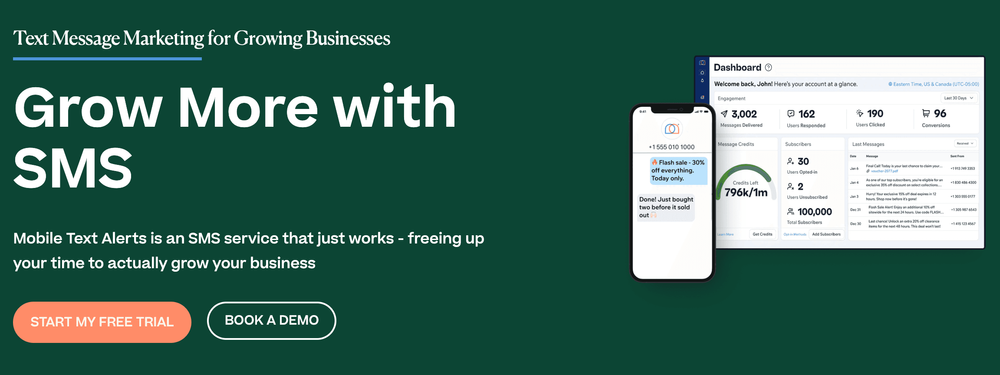
Mobile Text Alerts
Mobile Text Alerts is the best overall choice thanks to its combination of simplicity, rapid deployment, dependable automation, and transparent pricing designed for novice and experienced SMS users alike. So this is a great option for companies with marketing needs, such as financial brands.
Best suited for:
- Businesses that want to launch SMS campaigns quickly, with automation flows for welcome sequences, reminders, and tailored follow-ups without complexity.
- Businesses needing reliable delivery for time-sensitive lead engagement and consistent performance.
Pros:
- Automation workflows designed for effective lead nurturing and systematic follow-ups.
- Clean, intuitive interface across desktop and mobile, reducing training time.
- Transparent subscription tiers with clear feature access.
- Consistent message delivery and robust support resources.
- Good for both non-technical teams that want to execute campaigns without reliance on developers and those who want more technical flexibility.
Cons:
- Fewer advanced AI personalization features compared to some enterprise platforms.
- Less-advanced interface capacity for highly customized or conditional workflows.
Instead of manually following up with every new lead, a financial brand could build an automated nurture flow that immediately sends a welcome message, follows up with reminder texts over several days, and includes a scheduling link for booking a consultation. This ensures consistent touchpoints without requiring daily hands-on effort.
Pricing: The core plan starts at $20/mo if you pay annually, and gives you 500 message credits along with unlimited users and opt-in keywords. Enterprise plans can come out to as low as $.0039/message.
SlickText
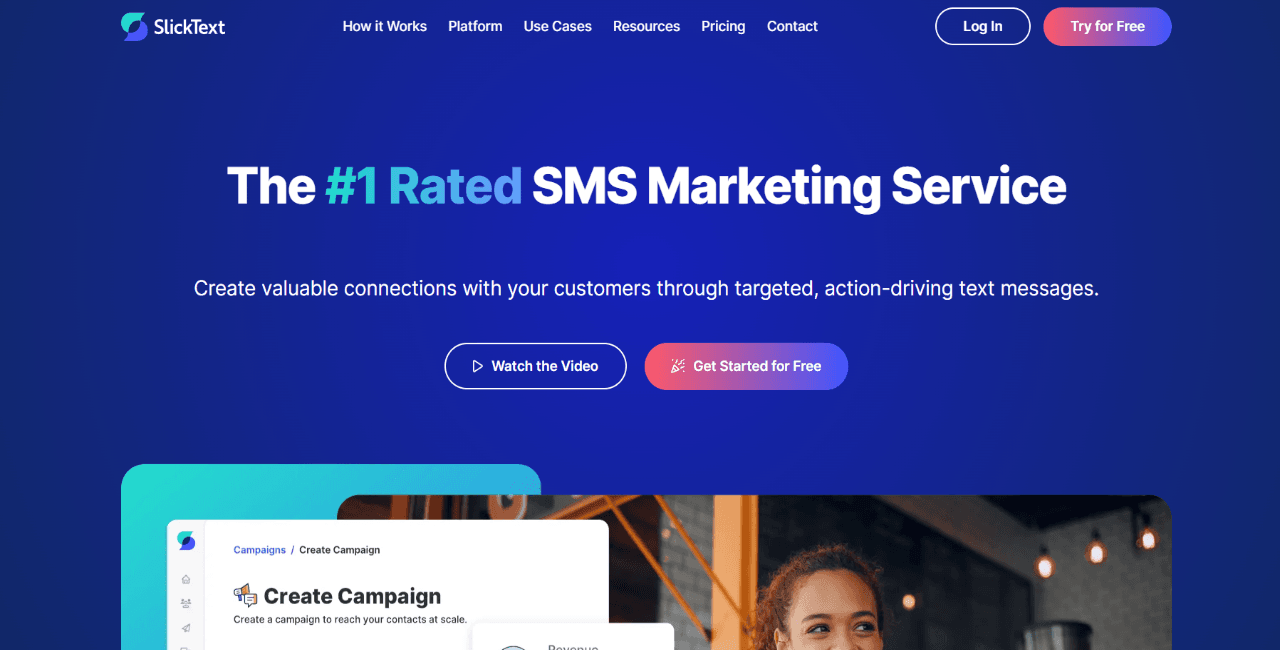
SlickText ranks among the most popular SMS platforms. It boasts a great balance of easy use and powerful marketing tools that support clean lead nurturing workflows.
Best suited for:
- Businesses focused on list building, engagement, and segmentation using keywords, popups, and web forms.
- Marketing teams that want automation and personalization without a steep learning curve.
- Retailers and local businesses running promotional and loyalty campaigns along with nurture sequences.
Pros:
- Excellent subscriber acquisition features to fuel nurture lists.
- Drip campaign builders and triggered workflows that streamline follow-ups.
- Flexible personalization and segmentation for targeted messaging.
- Clear analytics and reporting to track performance.
- Strong integration ecosystem with customer relationship management (CRM) and landing page tools.
Cons:
- Pricing tends to scale significantly as message volumes rise.
- The interface can feel dense for users who prefer minimal designs.
- Not as deep in workflow customization as some enterprise CRM platforms.
A financial brand looking to grow and activate its subscriber base could use keywords and web forms to capture new leads, then automatically send a welcome offer followed by segmented promotions based on interests or past engagement. This structured sequence keeps prospects warm while gently guiding them toward purchase.
Pricing: Plans typically start at around $29 per month with volume-based pricing that scales with the size of your text list. If you pay annually, the price is reduced to less than $25, and you also get 2 months free.
Klaviyo
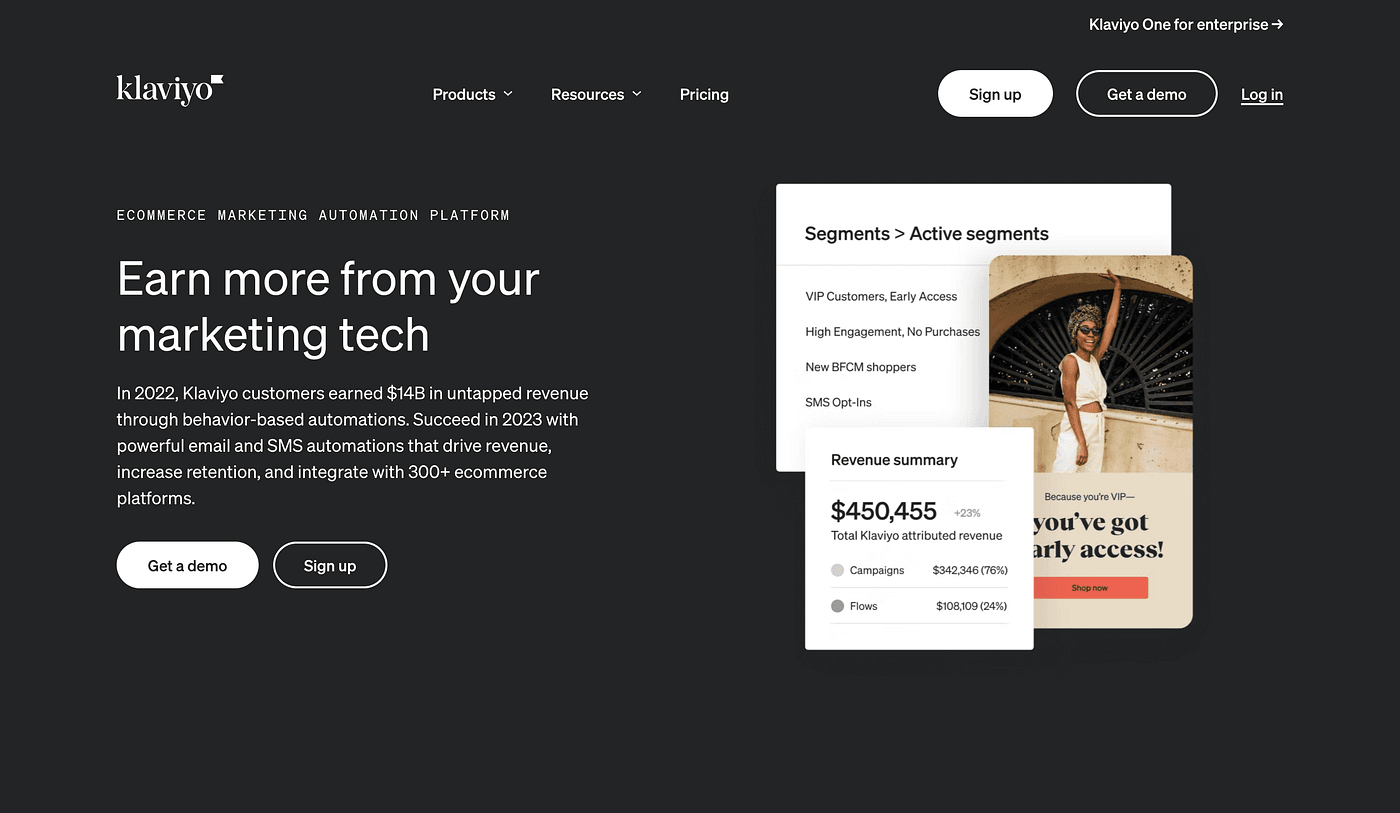
Klaviyo is widely adopted by ecommerce brands for unifying SMS with email and other channels to create seamless nurture sequences that reflect customer behavior.
Best suited for:
- Ecommerce businesses that want coordinated SMS and email campaigns powered by shared behavioral data.
- Revenue-focused teams who need precise targeting based on actions, purchase history, and engagement.
- Organizations prioritizing lifecycle marketing with advanced segmentation.
Pros:
- Deep integration with Shopify and other commerce ecosystems.
- Unified SMS + email sequences for synchronized nurturing.
- Advanced segmentation based on user behavior and attributes.
- Revenue attribution and analytics linking SMS to sales performance.
- Customizable workflows with rich automation logic.
Cons:
- Pricing is contact-volume dependent and can escalate quickly.
- Steeper learning curve for users new to multichannel marketing platforms.
- Overly complex for teams that only need basic SMS broadcast tools.
- Ecommerce-oriented so not tailored to other verticals.
An ecommerce fashion brand could trigger an abandoned cart email, then follow up with a personalized SMS reminder referencing the exact product viewed. By coordinating email and SMS within a unified workflow, the brand increases visibility without overwhelming the customer, and that improves conversion rates across the funnel.
Pricing: Klaviyo doesn’t have pre-made plans to choose from. Pricing typically starts based on contact list size and messaging volume, which may be higher than single-channel solutions.
Attentive
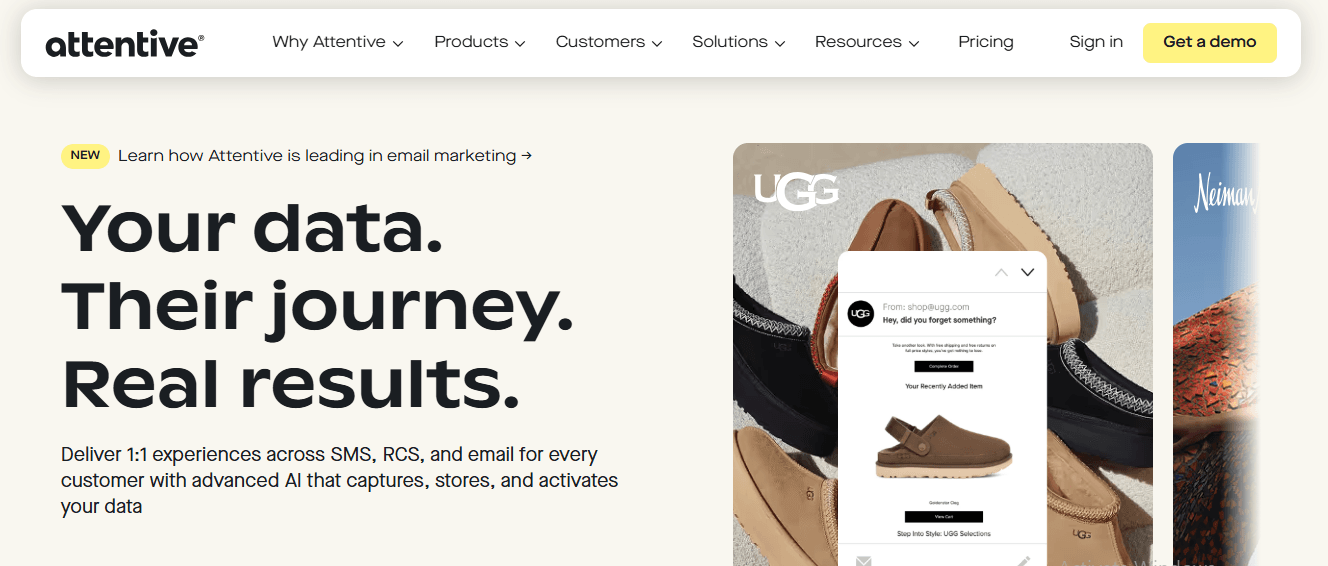
Attentive is an enterprise-grade SMS marketing platform with a strong reputation for AI-assisted personalization and compliance-centered messaging for high-volume deployments.
Best suited for:
- Large retailers and enterprise teams managing substantial subscriber bases and complex campaigns.
- Brands that demand AI-driven personalization and predictive segmentation to optimize conversion impact.
- Teams that need strong compliance and deliverability infrastructure baked into the platform.
Pros:
- Predictive personalization powered by AI.
- Sophisticated segmentation that supports nuanced audience targeting.
- Rich MMS messaging capabilities that increase engagement.
- Compliance and deliverability safeguards at scale.
- Dedicated support for enterprise clients.
Cons:
- Premium pricing structure tailored to large enterprises.
- Requires more onboarding and strategy planning than SMB tools.
- Excessive features for teams focused solely on simple SMS nurturing.
A nationwide financial brand with a large subscriber base could deploy predictive SMS campaigns that adjust messaging based on browsing behavior, seasonal demand, and purchase history. Instead of sending broad promotions, the brand delivers personalized nurture sequences designed to drive repeat purchases at scale.
Pricing: Attentive’s pricing is custom and starts at a premium enterprise level, based on subscriber volume and messaging requirements. Adding AI tools affects the overall price you pay.
Twilio
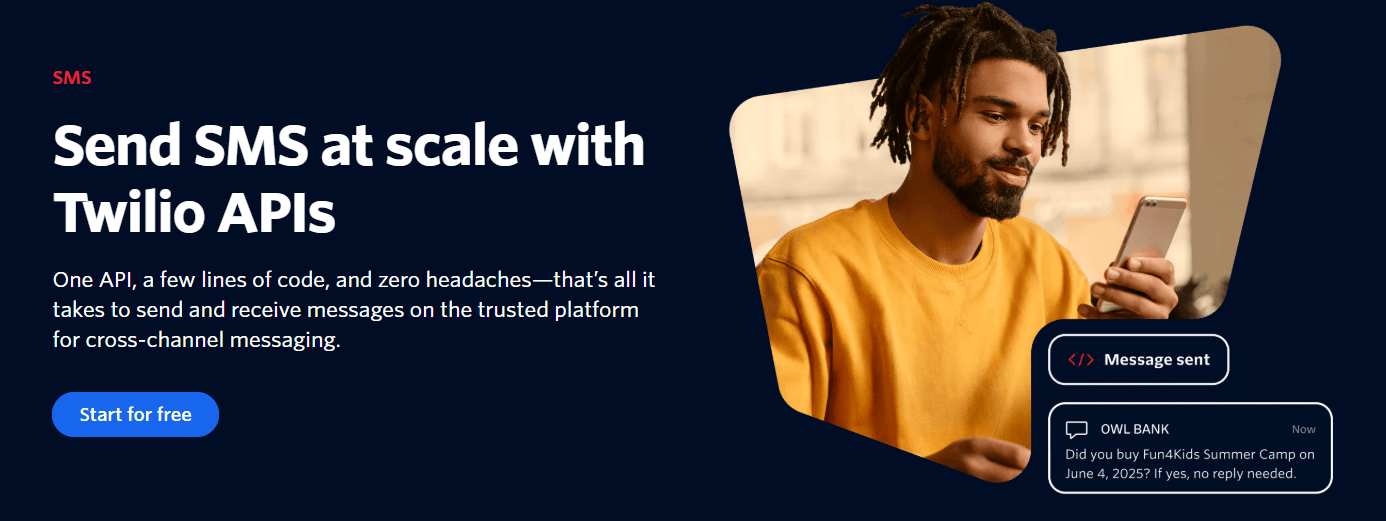
Twilio stands apart as a developer-first communications platform, providing APIs that allow for complete control over messaging logic and custom workflows.
Best suited for:
- Organizations with development teams that want to embed messaging into custom applications.
- Businesses that need cross-channel messaging (SMS, MMS, WhatsApp, etc.) with global reach.
- Tech-driven companies that want bespoke automation and integrations outside the constraints of off-the-shelf tools.
Pros:
- Extremely flexible, fully programmable APIs.
- Global messaging infrastructure and channel support.
- Scalable from small usage to worldwide deployments.
- Pay-as-you-go model with competitive per-message rates at high volumes.
Cons:
- Requires engineering resources to build and maintain.
- No native marketing dashboard out of the box.
- Compliance responsibility rests with the user.
A financial brand with an in-house development team could integrate Twilio directly into its marketing workflow, triggering SMS alerts when prospects or customers hit specific milestones or show signs of inactivity. These custom-built messages reinforce engagement at critical moments in the customer journey.
Pricing: Twilio uses a pay-as-you-go pricing model, often with rates as low as a few fractions of a cent per message at scale.
Textmagic
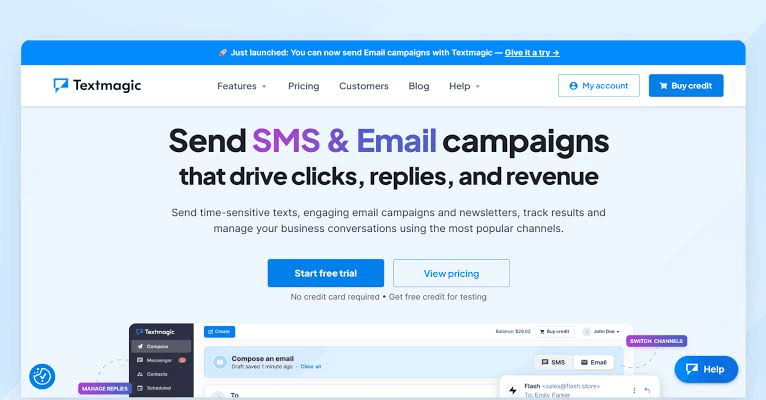
Textmagic is popular for its straightforward messaging tools and global reach, making it a solid choice for teams that need flexible pricing and uncomplicated SMS capabilities.
Best suited for:
- Businesses that want a pay-as-you-go model without long-term monthly commitments.
- Teams sending transactional messages, reminders, and occasional promotions.
- Companies that need international deliverability across many countries.
Pros:
- Transparent, usage-based pricing.
- Simple and intuitive interface suitable for beginners.
- Good global reach and deliverability.
- Ideal for alerts and transactional messaging.
- No subscription lock-in required.
Cons:
- Automation capabilities are more limited compared to advanced platforms.
- Less sophisticated segmentation tools.
- Not designed for deep, behavior-based nurture sequences.
A financial brand might rely on Textmagic to automate engagement messages and send occasional promotional updates, ensuring consistent communication without committing to a monthly subscription. This could help customers engaged while maintaining cost flexibility.
Pricing: Textmagic offers a usage-based pricing model. You purchase credits once and use them across services, including SMS, email, and more.
EZ Texting
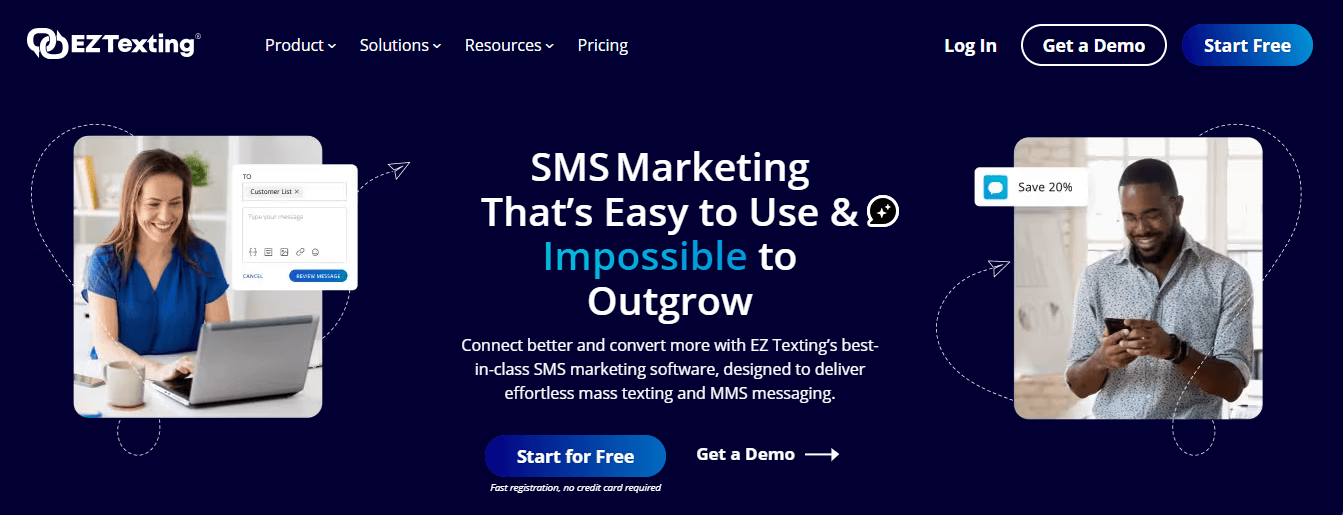
EZ Texting stands out for its creative messaging tools and visual engagement features that help brands make SMS more impactful.
Best suited for:
- Marketing teams that benefit from built-in MMS editors and creative tools.
- Brands that use imagery and QR code flows within text campaigns.
- Organizations that value collaboration features like shared team inboxes.
Pros:
- Built-in MMS editor and media library.
- Easy campaign setup with visually engaging options.
- Keyword, shortcode, and QR code support.
- Two-way texting and shared team inbox.
- User-friendly for creative use cases.
Cons:
- Higher pricing relative to some SMB-focused platforms.
- Automation depth is not as advanced as workflow-centric CRM tools.
- Customization options can feel limited compared to highly modular platforms.
A financial brand focused on visual storytelling could use EZ Texting’s MMS tools to send product images, limited-time offers, and QR-based promotions directly to subscribers. By combining visuals with timely messaging, the brand could increase engagement and encourages faster purchase decisions.
Pricing: EZ Texting offers monthly subscription tiers, with the “launch” plan starting at $25/mo which gives you 500 credits. You can get a 20% discount if you pay annually.
Do These Platforms Actually Help to Nurture Leads?
If you’ve gone through the entire list and gained an overview of what each tool does best and how they work, you might still be wondering whether the real-world results justify the cost.
The good news is that, when used with the right strategy, these platforms can absolutely deliver meaningful outcomes.
Below are some real-world wins that illustrate this. Although they aren’t finance-specific, they illustrate the kinds of successes that are possible with SMS.
Emily Demirdonder, Director of Operations & Marketing at Proximity Plumbing
Emily oversees both emergency service logistics and customer retention strategy.
In a 24/7 service-based business, speed and personal follow-up are critical. SMS became a core part of their nurturing process because of its immediacy.
While emails often remained unopened for days, text messages consistently achieved 90%+ open rates within minutes. By implementing automated drip sequences, her team stayed in front of warm leads without manually chasing each inquiry.
This consistent visibility improved appointment bookings and gave the company clearer pipeline control, directly influencing revenue and conversion rates.
Kyle Sobko, CEO of SonderCare
Kyle sells luxury hospital beds priced at $5,000 and above—a high-consideration purchase where timing is everything.
To prevent leads from going cold, his team implemented behavior-based SMS workflows across more than 50,000 customer interactions.
When a prospect viewed the Aura Series product page multiple times within 48 hours, they automatically received a personalized SMS referencing that specific bed, along with a direct booking link.
This targeted follow-up converted at 14%, significantly outperforming their standard email drip at 4%. For high-ticket products, SMS provided timely, relevant engagement that meaningfully increased sales conversions.
--
These examples show what’s possible when SMS is used strategically to nurture leads and drive sales. If you’re looking to apply a similar approach in your team’s financial brand, this SMS marketing strategy playbook will provide a practical guide for you to start.
Final Thoughts
At this point, the next step isn’t choosing the “most powerful” platform—it’s choosing the one that matches how your team actually operates.
If you’re running lean and need structured follow-ups without technical complexity, prioritize simplicity and fast deployment.
If you’re managing an ecommerce lifecycle strategy, look for deep behavioral segmentation and cross-channel coordination.
If you have engineering resources and want total flexibility, programmable APIs may be the right direction.
What matters most is momentum. The longer leads sit without consistent, structured follow-up, the colder they become.
If you want a practical place to start, Mobile Text Alerts offers a 14-day free trial that lets you build automation flows, test segmentation, and launch your first nurture sequence without long-term commitment.
Instead of overanalyzing every feature comparison, you can validate what works for your team in real conditions.
Author Bio

Sameer Sohail is a freelance writer and marketer who works with SaaS and GenAI companies.
Frequently Asked Questions
What features matter most for SMS lead nurturing?
Automation and segmentation form the backbone of effective nurturing. Automation ensures consistent follow-ups, while segmentation increases message relevance. Two-way messaging, analytics, and integrations further enhance conversion potential.
How does SMS improve sales conversion?
SMS improves conversion by delivering timely, visible, and personal communication. It enables reminders, offers, and direct conversations that move leads toward decisions faster.
What pricing models should businesses expect?
Most platforms offer subscription tiers with included message credits or usage-based pricing. Developer APIs commonly charge per message, while SMB-focused tools bundle features into predictable monthly plans.
Are SMS platforms suitable for non-technical teams?
Yes. Many platforms prioritize intuitive interfaces and no-code automation builders, allowing marketers and sales teams to manage campaigns independently.