



Explore this content with AI:
My friend Sarah dropped $3,700 on an SMS campaign last quarter promoting her skincare line’s flash sale.*
(*The actual amount Sarah invested has been changed for the purposes of this article.)
When I asked how it performed, she said, “Pretty good, I think? We got some orders.”
“How many orders?”
“I’m not sure. A lot came in that weekend.”
“And how much revenue did those texts actually generate?”
Silence.
Sarah dumped all this money into SMS without knowing if it made her a single dollar in profit. She couldn’t tell me if customers loved her messages, ignored them, or if she'd have been better off setting that budget on fire.
Like Sarah, most businesses treat SMS marketing like a black box, despite it being the most popular marketing channel.
But without measuring ROI, you’re flying blind.
Calculating text marketing ROI tells you the profit your text campaigns generate, calculated as revenue driven versus campaign costs.
It’s the difference between “we got a few orders” and “we made $47,000 on a $2,100 investment.”
This guide will show you how to calculate your SMS marketing ROI, understand what actually drives it, and implement strategies that turn text messages into one of your most profitable channels.
Whether you’re just starting with SMS or you've been sending campaigns for years, by tracking ROI, you’ll walk away knowing exactly how to measure and maximize your returns.
SMS Marketing ROI Calculation: TL;DR
| Main heading | TL;DR | Key metric / formula / benchmark |
|---|---|---|
| Why measuring SMS marketing ROI matters | Know what worked. | Use ROI to spot winning campaigns vs. losing campaigns |
| How to calculate SMS marketing ROI | Use ROI math. | ROI = [(Revenue from SMS - Cost of SMS Campaign) ÷ Cost of SMS Campaign] × 100 |
| What a “good” SMS ROI looks like | It depends. | SMS action rate: 21%–30% |
| Core SMS marketing KPIs to track | Track the few that matter. | 53% use SMS for open rates |
| Common SMS ROI measurement challenges | Attribution + costs + compliance. | Use UTM links; extend attribution window beyond** 24–48 hours** |
| Strategies to increase SMS ROI | Segment + trigger + clean lists. | Trigger timing for abandonment texts: browse 12–24h;** cart 1–2h** |
Why measuring SMS marketing ROI matters beyond vanity metrics
When you run an SMS marketing campaign without measuring, it’s tempting to call it a success with the slightest spike in sales.
That’s more like operating on gut instinct and sneaky numbers. Without tracking ROI, you’re wasting budget and missing opportunities to find leaks in a poor strategy.
Measuring SMS marketing ROI acts like a compass, showing you directions on where to put your money next. You can see which messages turn subscribers into buyers, which segments respond best, and which campaigns are dead weight that need to be cut.
Besides that, measuring SMS marketing ROI is essential for several other reasons:
- Data-driven campaign improvement: You need to know exactly which type of SMS content, what timing, and offers work best so you can double down on what’s profitable and ditch what’s not.
- Proof of value for stakeholders: When leadership asks if investment in SMS marketing pays off, you'll have hard numbers showing revenue generated, not just engagement.
- Clarity on budget allocation: It’s hard to advocate for SMS campaign budget without knowing whether it generates a positive outcome. By measuring the right metrics, you’ll get a clear idea on how much SMS returns compared to email, social, or paid ads, and adjust the budget accordingly.
- Early detection of problems: Measuring ROI is the only way to find underperforming segments, technical delivery issues, or messaging failures before they waste serious money.
As the saying goes: You can’t control what you don’t measure. You can’t measure what you don’t track.
Without ROI measurement, managing SMS campaigns effectively and profitably is nearly impossible.
How to calculate SMS marketing ROI
Calculating SMS marketing ROI isn’t nearly as painful as you think.
However, most people track the vanity metrics that look pretty in reports but tell you absolutely nothing about how much money their campaigns are bringing back or losing.
The formula for calculating SMS ROI is pretty straightforward:
ROI = [(Revenue from SMS - Cost of SMS Campaign) ÷ Cost of SMS Campaign] × 100
Simple enough, right? But you can’t simply slap your monthly platform fee into a calculator and call it a day.
To get the realistic ROI figure, you also need to account for the other essential costs to get a clear picture of what goes into each SMS marketing campaign, such as:
- Platform fees: your SMS software subscription. Whether you're paying $50/month, $5,00/month, or $50,000/month, it counts.
- Message costs: Most platforms charge per message sent, with many carriers also passing along mobile carrier fees. (See the mobile carrier fees chart below.) All of this adds up fast, especially if you’re texting thousands (or millions) of subscribers.
- List management: Time spent segmenting audiences, cleaning your list, managing opt-ins and opt-outs. Your time (or your team’s time) has a dollar value.
- Copywriting and A/B testing: You’re paying someone to write those messages, test variations, optimize send times.
- Compliance resources: TCPA compliance audits, legal reviews, privacy infrastructure. Sounds boring? Yes. Expensive if you skip it? Also yes.
Here are some typical pass-through carrier fees you may see (in USD per message), on top of your regular plan fees:
| Mobile Carrier | Toll-Free SMS | Toll-Free MMS | 10DLC SMS | 10DLC MMS | Short Code SMS | Short Code MMS |
|---|---|---|---|---|---|---|
| AT&T Wireless | 0.003 | 0.0075 | 0.003 | 0.0075 | 0.003 | 0.0075 |
| T-Mobile | 0.003 | 0.01 | 0.003 | 0.01 | 0.0025 | 0.01 |
| US Cellular | 0.004 | 0.0065 | 0.004 | 0.0065 | 0.004 | 0.0065 |
| Verizon | 0.004 | 0.0065 | 0.004 | 0.0065 | 0.004 | 0.0065 |
| Bell Mobility | 0.008165 | 0.030433 | 0.008106 | 0.0302116 | 0.008106 | 0.0302116 |
| Fido | 0.0067 | 0.0111 | 0.0084 | 0.017 | 0.007369 | 0.014737 |
| Rogers Wireless | 0.0074 | 0.0148 | 0.0084 | 0.017 | 0.007369 | 0.014737 |
| Telus Mobility | 0.0075 | 0.015 | 0.0075 | 0.015 | 0.0075 | 0.015 |
What is a good ROI for SMS marketing?
On average, 21% to 30% of SMS recipients make a purchase or take action. Email, on the contrary, converts at an average of 12.04%. The difference clearly shows why SMS is one of the most effective ways to drive measurable business results.
That being said, a good ROI for SMS marketing is extremely subjective.
It shifts based on your industry vertical. For example, a 5% conversion rate might have a SaaS founder celebrating, while an ecommerce brand selling impulse-buy products would consider that underperformance. The point? You’re setting yourself up for disappointment if you’re measuring SMS conversion rates like they’re universal truth.
Your actual ROI depends on whether you’re optimizing for the metrics that move the needle for your specific business model and growth stage.
5 SMS marketing KPIs you need to track today
| KPI | What it tells you | Formula |
|---|---|---|
| Month-over-month subscriber growth | If your list is growing net-new. | List growth rate = {[(Number of new subscribers) - (Number of unsubscribes)] / Previous month's total subscribers} × 100 |
| Message conversion rate (CVR) | If texts drive the intended action. | CVR = (Number of conversions / Number of texts delivered) × 100 |
| Click-through rate (CTR) | If people click your SMS links. | CTR = (Number of people clicked / Number of subscribers) × 100 |
| Message response rate | If subscribers reply (intent signal). | Response rate = (Total responses / Total messages sent) × 100 |
| Attrition rate (opt-out rate) | If subscribers are leaving. | Opt-out rate = (Subscribers who opted-out / Subscribers at start) × 100 |
According to Statista, 53% of marketers stated open rates as the primary reason for using SMS as a channel.
With many consumers habitually glued to their mobile devices, no wonder the average open rate for SMS is quite high (and often immediate). However, open rates only tell a small part of the story.
The purpose of tracking SMS marketing KPIs is to build a strong and data-backed understanding of your:
- List growth
- Revenue growth
- Message engagement
You’ll want to analyze the lift SMS adds to your overall marketing mix and whether that extra touchpoint actually increases revenue across your digital channels. So the KPIs you track should ladder up to your company’s actual goals, not some industry benchmark report that doesn’t know your business type.
Keeping that in mind, I have picked five KPIs to measure the success of your program on a high and granular level:
1. Month-over-month subscriber growth (list size)
Growing your list is foundational to long-term SMS success. More subscribers equals more opportunities to nurture loyalists and drive revenue. But the catch is getting new subscribers contributes nothing of use if you can’t keep the ones you already have engaged.
Here’s how to measure month-over-month subscriber growth:
List growth rate = {[(Number of new subscribers) - (Number of unsubscribes)] / Previous month's total subscribers} × 100
This KPI tells you whether your overall growth strategy is working—from the signup incentives driving conversions to where people are actually opting in.
If growth stalls, it’s a flashing neon sign that your incentives aren’t enticing enough, you need new signup unit types, or subscribers are bailing faster than you’re acquiring them.
2. Message conversion rates (CVR)
Conversion rates give you direct insight into audience needs and preferences. Think of conversion rate as message-level ROI evaluation.
It tells you whether the revenue you generate justifies your investment, or if there’s opportunity to tweak messages and maximize sales.
Track engagement across campaigns, triggered messages, transactional texts, and conversational messages. This helps you create targeted messaging, identify drop-off points in the customer journey, and ultimately increase revenue and loyalty.
But remember, not all messages are created equal.
If you’re focused on loyalty, CVRs might not be the metric to look at. You’ll end up mixing in non-promotional, brand-building messages. Instead, focus on how these messages grow your engaged subscriber base.
And whether nurturing campaigns lift CTRs and CVRs when you announce new products or offers.
Here’s how to measure your message conversion rates:
CVR = (Number of conversions / Number of texts delivered) × 100
Pro tip: To calculate performance over time, benchmark CVRs against similar messages. A product launch campaign drives different engagement than a seasonal offer. Same goes for triggered messages. Shoppers entering your welcome journey are in a completely different mindset than those who abandoned their cart.
3. Click-through rate (CTR)
Many SMS campaigns include a CTA with a clickable link. Click-through rate measures the percentage of subscribers who actually clicked that URL.
CTRs vary wildly across businesses and even different offerings within the same company. A text to VIP high-spenders about limited-edition lipstick will likely crush a general campaign’s CTR. Seasonality and price point matter too.
Here’s how to measure click-through rate:
CTR = (Number of people clicked / Number of subscribers) × 100
When setting CTR KPIs, connect them to business goals. A product with razor-thin margins demands high CTR to contribute profit. While a link to charitable donations can create brand goodwill even with fewer clicks.
4. Message response rate
Tracking response rate alongside other KPIs offers critical insight into consumer behavior. A high response to a modest discount signals strong existing interest in your brand. Whereas a weak response to a generous offer signals you need to build trust or provide more value before converting.
Response rates are crucial because they’re one of the few easily calculable figures you can measure for SMS campaigns. Unlike revenue, ROI, or client acquisition––which increase for countless reasons and make attribution messy—response rate only has two variables.
Both variables are easily defined, measured, and accessed.
Here’s how to calculate your SMS response rate:
Response rate = (Total responses / Total messages sent) × 100
5. Attrition rate (opt-out rate)
Not all metrics bring good news. Attrition rate measures how fast subscribers opt out during a specific period.
Some unsubscribes are inevitable. But a huge spike in opt-outs screams that you’re annoying subscribers with too many texts or your campaigns don’t provide enough value.
Here’s how to measure opt-out rate:
Opt-out rate = (Subscribers who opted-out / Subscribers at start) × 100
Remember: When setting attrition KPIs, consider your overall SMS strategy for that period. Sending tons of messages around Black Friday might spike opt-outs. But if the revenue is justifiable, it’s worth the trade-off.
Common challenges when calculating SMS marketing ROI
Here are the biggest obstacles standing between you and accurate ROI measurement and what you can actually do about them.
1. The multi-channel attribution maze
Your customer sees an SMS offer, checks your Instagram, reads an email, clicks a retargeting ad, then finally converts three days later. So which channel gets credit for the sale?
This is the multi-channel attribution problem that makes calculating SMS ROI feel like solving a Rubik’s cube blindfolded. Customers don’t move in neat, linear paths anymore. They bounce between touchpoints. Even though SMS often elicit actions, it rarely gets credit for the conversion.
Jason Hennessey, founder of Hennessey Digital, puts it bluntly: “First-click attribution still matters to us. We want to know what channel sparked a movement. SMS often does the heavy lifting silently, especially when layered with retargeting.”
His team tags landing pages with SMS-specific UTM parameters and tracks downstream behavior across multiple touchpoints. “Without it, you give credit to the wrong tools. SMS deserves more credit than it gets sometimes.”
To fix attribution challenge, use unique tracking links with UTM parameters for every SMS campaign so you can trace which messages actually drive conversions.
Implement multi-touch attribution models that show how SMS works alongside your other channels instead of treating each touchpoint in isolation. Extend your attribution windows beyond 24-48 hours, especially for higher-consideration purchases where the decision cycle is longer.
2. Cost accuracy
Most businesses calculate SMS ROI by dividing revenue by their platform subscription cost. That’s cute, but wildly incomplete.
Real SMS costs include software fees, compliance tools, staff time for campaign creation and management, design resources for landing pages, customer service overhead from increased inquiries, and potential legal fees if compliance goes sideways.
If you’re not tracking these, your ROI calculations won’t be fully accurate.
One way to fix this could be to create a detailed expense tracking template that captures every line item, whether your SMS platform to the hours your team spends building campaigns
Include indirect costs like the customer service time spent handling SMS responses and opt-out requests. Factor in compliance infrastructure because the tools and processes that keep you legal aren’t free.
Yes, this takes more work upfront. But knowing your actual costs is the best way to make informed decisions about whether to scale, optimize, or pivot your SMS strategy.
3. Complying with TCPA and CTIA regulations
SMS marketing is one of the most heavily regulated channels out there. A single Telephone Consumer Protection Act (TCPA) violation can trigger fines in the thousands and obliterate customer trust overnight.
SMS compliance involves federal laws, industry guidelines, and wireless carrier policies. The TCPA sets strict requirements for consent and opt-outs. The Cellular Telecommunications Industry Association (CTIA) adds guidelines about messaging practices. Carriers enforce their own rules to protect subscribers.
For businesses operating at scale, it gets worse. Different U.S. states define consent and quiet hours in unique ways. Go global, and you're dealing with Europe's General Data Protection Regulation (GDPR)and Canada's Anti-Spam Legislation (CASL), both significantly stricter than U.S. requirements.
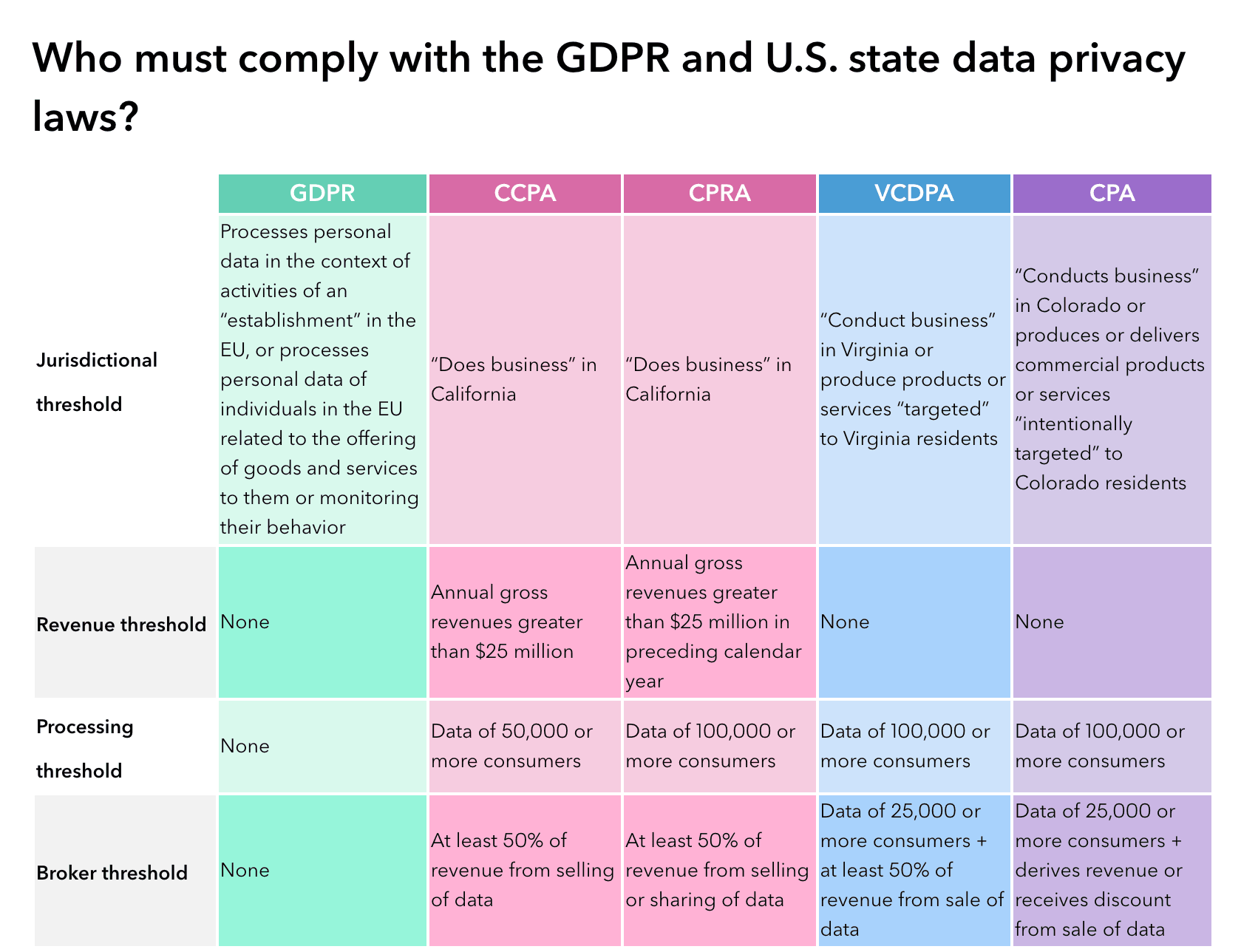
Source: Bloomberg Law
To avoid getting into legal trouble, you could consider adopting “compliance by the highest standard” by aligning your policies with the strictest applicable laws across all markets you operate in.
Conduct regular compliance audits to catch issues before they become expensive problems. Document consent meticulously with timestamps and clear opt-in language that would hold up under regulatory scrutiny.
Most importantly, invest in compliance tools, like Mobile-Text Alerts, that automate opt-out management and consent tracking.
4 expert-backed strategies to maximize your SMS marketing ROI
| Strategy | Core idea | What to do | Key timing / benchmark |
|---|---|---|---|
| Sync SMS + email around intent | Email = explain. SMS = urgency/action. | Use SMS for urgent pushes; use** email for details**. | None. |
| Segment based on buying cycles | People aren’t always ready to buy. | Send promos when in-market; send** value/education when not**. | Example: long cycles like** mattresses**. |
| Automate behavioral triggers (right urgency) | Trigger texts based on behavior. | Set flows for browse/cart/checkout abandonment and tune send speed. | Browse: 12–24 hrs;** Cart:** 1–2 hrs. |
| Prioritize data hygiene | Clean list = fewer issues. | Do a monthly list audit; use** confirmed opt-ins** (“YES”/keyword). | 23% would ditch brands that “spam” too much. |
Most SMS advice boils down to “personalize your messages” and “provide value,” which is about as useful as telling someone to just be better at marketing.
Generic best practices don’t generate ROI. It’s specific tactical decisions that separate brands clearing 20x returns from those barely breaking even.
I’ve curated actionable strategies from four SMS marketing experts who’ve scaled SMS profitably across ecommerce, SaaS, and subscription brands. Here’s what they’re doing differently:
1. Sync SMS and email around intent to avoid overwhelming customers
Many brands treat SMS and email like competing siblings fighting for attention. Aaron Orendorff, who’s built SMS marketing strategies for multiple eight-figure brands, completely rejects this framework.
“Email exists to explain, persuade, and tell the fuller story. SMS exists to create urgency and prompt action,” he explains. “When brands try to make both channels do the same thing, that’s when customers feel overwhelmed.”
Many best practices tell you to wait and see if email works before sending SMS. Aaron pushes back hard on this. If someone gave you their phone number, theyve already signaled they're open to hearing from you there. Holding back SMS to protect email performance slows momentum at the exact moment when intent is highest.
When it’s urgent, SMS takes the lead. When explanation or reassurance is needed, email does the heavy lifting. When SMS and email are synced around purpose rather than forced into artificial spacing, frequency becomes far less of a risk.
2. Listen first, then segment based on buying cycles
One of the laziest assumptions in SMS marketing is that every subscriber is in a buying mindset all the time. Sam Melnick,, Vice President Product Marketing at Postscript, believes it’s the other way around.
If someone buys a mattress every seven years, treating them like they’re perpetually ready to convert is delusional. Yet most brands hammer subscribers with sales messages nonstop regardless of where they are in their decision cycle.
According to Sam, when someone is actively researching or close to purchasing, SMS can lean promotional and conversion-focused. But once that purchase window closes, smart brands shift gears. They move into educational, value-driven messaging designed to keep the relationship warm without constantly pushing discounts.
Sam points out that brands varying their SMS content consistently outperform on major sale days when inboxes are flooded. That variation might be a message from the founder or educational content that helps customers make better decisions.
These messages don’t always include a discount, but they build trust that pays off when it matters most.
3. Automate behavioral triggers at the right urgency level
Chase Dimond and Jimmy Kim, two experienced SMS marketers, emphasize that SMS automation’s real power lies in reacting to what a user just did, or didn’t do.
Browsing a product, abandoning a cart, nearing a subscription renewal, or hitting a lifecycle milestone all signal intent. When messages are triggered by these moments, they feel helpful and expected, not intrusive.
But the problem is most marketers apply the same urgency to every behavior.
Not all actions deserve the same response speed. Browse abandonment works best with a lighter, curiosity-driven follow-up 12–24 hours later. Cart abandonment calls for a quicker nudge, typically 1–2 hours post-drop-off. Checkout abandonment, where intent is highest, justifies faster and more direct SMS reminders.
Review flows every 30 days to ensure timing, offers, and links are still current. Because these messages are action-based, they should naturally have low complaint rates.
4. Treat data hygiene with utmost priority
Most brands don’t clean their SMS lists. Unlike email, SMS doesn’t yet have aggressive spam filters forcing marketers to behave well. However, 23% of consumers would ditch a brand if they “spam” too much with marketing outreach.
So it’s also essential to schedule a monthly audit to thoroughly review and make updates to any new data collected.
Chase and Jimmy strongly recommend adopting confirmed opt-ins, even though SMS regulations technically don’t require them the same way email does.
Asking users to reply “YES” or text in a keyword to complete a subscription ensures the person genuinely wants to receive messages. This reduces accidental opt-ins, protects against TCPA-related complaints, and dramatically lowers the risk of fines.
Most consumers are already accustomed to double opt-ins in email, so this step doesn't add friction.
Examples of 3 brands (Mobile Text Alerts customers) proving the potential of SMS marketing for ROI
Here are three Mobile Text Alerts customers who make SMS marketing work not through massive budgets or complex strategies, but through smart segmentation, timely automation, or understanding what their customers actually need.
Although these users don’t elaborate in detail on how they are determining ROI, they clearly have found SMS marketing to be a worthwhile investment.
1. Main Street Crossing
Katie Hollis is a marketer for Main Street Crossing, a music venue in Houston. Their biggest challenge was to fill seats consistently when promoting dozens of different shows to an audience with wildly different tastes.
She opted for surgical segmentation based on past attendance.
Katie imports contact files and sorts them into groups based on which shows concertgoers attended previously. If someone came to a country performance, they get texted about upcoming country shows. If they showed up for indie rock, that’s what hits their phone.
Two operational factors Katie specifically calls out:
- The ease of importing and segmenting contacts without needing technical skills or CSV gymnastics
- Immediate support access: "I can always get a hold of someone quickly and get my question answered then and there. There's no waiting 24 hours for a response. They never make me feel dumb."
“Mobile Text Alerts has made it very easy to get information out to people who are interested and to sell tickets quickly.” — Katie Hollis
2. Ventresca Real Estate
Frank Ventresca needed a way to stay top-of-mind with buyers and sellers without being annoying.
Real estate has brutal timing problems. Buyers might be ready tomorrow or six months from now. Sellers often need multiple touchpoints before they’re comfortable listing. Traditional outreach, such as cold calls and generic emails, gets ignored or feels pushy.
So Frank uses SMS drip campaigns to automatically “drip out” messages over designated time periods to sellers and buyers he’s in contact with. These aren’t aggressive sales pitches. They’re consistent, helpful touchpoints that keep him present without demanding immediate action.
Frank has seen sales going up exponentially. He also highlights, “I love using Mobile Text Alerts because it creates efficiencies for my business. I can create vast amounts of clients and have people opt in and communicate in a way that's really impossible to do any other way.”
3. Bethany's Bomb Bling
Bethany sells jewelry through live video sales on social media. The problem? You can’t control social media algorithms.
Facebook doesn’t reliably notify followers when you go live. Your carefully built audience might never see that you’re hosting a sale, even if they’d be interested in buying.
She uses SMS to notify customers directly when she’s going live or running a promotion.
“We cannot rely on Facebook or other social media platforms to notify our customers when we are live or when we have a sale or when we have a promo,” Bethany explains.
Sending texts boosted attendance to her live sales by 50%.
For direct sellers operating on thin margins where every sale counts, a 50% attendance boost directly translates to revenue. More people watching means more people buying. SMS gave Bethany control over her audience reach that social platforms stripped away.
Bethany says, “If you are considering Mobile Text Alerts, what I would tell you is that if you don’t do it, you are missing out on sales.”
Use SMS metrics & KPIs to keep your business growth in check
SMS does cost money and measuring ROI like conversion rates can be confusing. But you can make the channel a profitable revenue driver by focusing on the five key metrics as well as setting KPIs appropriate to your business.
Mobile Text Alerts makes measuring ROI uncomplicated with its built-in analytics that tracks delivery rates, click-throughs, conversions, and segment performance, all in one dashboard.
Its drip campaign functionality automates behavioral triggers like cart recovery and subscription reminders, which you’ll be able to track for performance. And when you need to optimize fast, the support team responds quickly.
Your subscribers opted in because they want to hear from you. Make sure what you’re sending is worth their attention. Start tracking, start optimizing, and turn those text messages into revenue you can measure, defend, and scale.
Get a free 14 day trial today. Or, explore Mobile Text Alerts' campaign automation and analytics features to build your SMS profit engine.
Frequently Asked Questions About Calculating SMS Marketing ROI
What is the average ROI for SMS marketing?
How do I calculate ROI for my SMS campaigns?
What key metrics should I track for SMS marketing ROI?
How can I improve my SMS marketing ROI?
Author Bio
Samirah Tabassum is a freelance content marketer who built her chops in ecommerce, marketing, and sales. She has written content for brands such as such as Insider One, UserGems, and Userpilot. Outside of the content world, you’ll find her either buried in a book or butchering French pronunciations.