



Explore this content with AI:
Imagine that a logistics firm in Chicago is facing a nightmare...
A single API glitch in their inventory management software freezes their inventory updates for 36 minutes. Warehouse staff can’t see which orders are being fulfilled, triggering a cascade of wrong shipments and $42,000 in losses within a day.
This story, though fictional, mirrors a real potential issue.
For something as crucial as inventory management where messaging forms the backbone of inventory syncs, even a couple minutes’ delay can ripple through entire logistics networks. How much more if it lasts hours upon hours!
Textmagic is one solution you may have explored for integrating SMS into your inventory management software reliably. And in this article, we’ll break down the 6 best Textmagic alternatives for inventory management software in 2026 — so you can evaluate different services built for reliability, speed, and the kind of always-on communication modern supply chains demand.
That way, you can integrate SMS into your inventory management software in a way that is reliable for your clients and seamless for you — with solid API support and documentation.
How I Evaluated the Best Textmagic Alternatives for Inventory Management Software
To identify the best Textmagic alternative for inventory management software, we looked at what truly matters. I.e., features and qualities that actually fix the itch you may have been scratching for years.
(In cases where I wasn’t able to personally test, I relied upon research to draw my conclusions.)
Here’s what I tested and researched on what you should look out for:
1) Reliability and uptime (my threshold: 99.95%+ uptime)
- What I tested: Historical uptime data, status page transparency, and incident response times
- What you should do: Ask vendors for their uptime SLA (service level agreement) in writing and check their status page for outage frequency over the past 6 months
2) Automation that saves time (suggested target: 70%+ reduction in manual updates)
- What I tested: Configuring triggers for low stock alerts, order confirmations, and shipping notifications without code
- What you should do: Request a sandbox environment and test building one automation flow yourself during the free trial.
3) Predictable pricing:
- What I tested: Total cost at 10K, 50K, and 100K messages/month, including carrier fees and support tiers
- What you should do: Get a detailed quote for your exact monthly volume, not just the starting rate
Side note: Remember that you may have to pay pass-through carrier fees for each message you send as well. See example of carrier fees below:
| Mobile Carrier | Toll-Free SMS | Toll-Free MMS | 10DLC SMS | 10DLC MMS | Short Code SMS | Short Code MMS |
|---|---|---|---|---|---|---|
| AT&T Wireless | 0.003 | 0.0075 | 0.003 | 0.0075 | 0.003 | 0.0075 |
| T-Mobile | 0.003 | 0.01 | 0.003 | 0.01 | 0.0025 | 0.01 |
| US Cellular | 0.004 | 0.0065 | 0.004 | 0.0065 | 0.004 | 0.0065 |
| Verizon | 0.004 | 0.0065 | 0.004 | 0.0065 | 0.004 | 0.0065 |
| Bell Mobility | 0.008165 | 0.030433 | 0.008106 | 0.0302116 | 0.008106 | 0.0302116 |
| Fido | 0.0067 | 0.0111 | 0.0084 | 0.017 | 0.007369 | 0.014737 |
| Rogers Wireless | 0.0074 | 0.0148 | 0.0084 | 0.017 | 0.007369 | 0.014737 |
| Telus Mobility | 0.0075 | 0.015 | 0.0075 | 0.015 | 0.0075 | 0.015 |
4) Responsive, human support:
- What I tested: Submitting technical questions during trials and timing first response
- What you should do: Test support responsiveness during your trial period with a real implementation question
💡 Use my scoring system: Rate each vendor 1-5 on these criteria, with reliability and integrations weighted double. Any platform scoring below 18/25 shouldn't make the list.
List of 6 Best Textmagic Alternatives for Inventory Management Software for 2026
At a glance:
| Platform | Best for | Standout feature |
|---|---|---|
| Mobile Text Alerts | Real-time stock updates and automated warehouse notifications | Instant workflow triggers |
| Plivo | Global logistics messaging | Global SMS routing |
| Vonage API | Developer ready enterprise messaging | Multi-channel messaging |
| Bandwidth | Regulated industries, compliance heavy op. | Direct-to-carrier network |
| Bird (formerly MessageBird) | Omnichannel order tracking | Whatsapp/SMS bridge |
| Open Source | Custom in-house solutions | Full customization |
A more in-depth summary
| Textmagic alternative | Inventory/ops-focused features | Integration methods mentioned | Pricing tiers / cost model | |
|---|---|---|---|---|
Mobile Text Alerts | Automation for inventory events like low stock, shipment sent, order received; two-way messaging; iMessage; compliance; instant workflow triggers; white-glove onboarding + developer support. | Native integration with HubSpot; API + SDKs; MCP servers; developer-friendly documentation; Zapier integration with thousands of apps. | Flat-rate starting $20/month, and as low as $0.0039 per message. | |
Plivo | Emphasis on global SMS routing + high deliverability across countries; scalable high-volume messaging; supports two-way alerts for confirmations (e.g., stock receipt/restock completion). | API, MCP servers, Zapier | Starts at $25/month + usage fees ($0.007/SMS) | |
Vonage APIs | Multi-channel (SMS + voice + WhatsApp); scalable for large volumes; delivery confirmations + analytics; compliance-ready. | API for multiple channels | $0.00809/message + additional fees | |
Bandwidth | Best for compliance-heavy/regulatory environments; direct-to-carrier reliability (owns telecom network); strong security/compliance; enterprise oversight of message flow. | APIs + dashboards for control/oversight. | Per-number or per-message cost structure starting at $0.005–$0.01 | |
Bird (formerly MessageBird) | Good for omnichannel order tracking across SMS, email, WhatsApp, and chat; fast delivery times. | Single dashboard for multiple channels (SMS, WhatsApp, chat, plus email); several integrations; API; Zapier. | Pay as you go; starts at $0.0074/message | |
Open-source solutions (i.e., RapidSMS, Gupshup) | Best for fully custom workflows; total control over how messaging plugs into inventory systems; flexible scaling; community-supported. | Build it yourself (custom integration into your inventory system); requires programming knowledge; longer setup; no official vendor support. | Pricing varies. |
With the tables out of the way, here’s a closer look at these platforms:
Mobile Text Alerts: Real-time SMS alerts with a plug-and-play API

Mobile Text Alerts is the simplest way for logistics and operations teams to keep everyone aligned on inventory status without complex setup.
Whether it’s low stock, restock confirmations, or shipping updates, Mobile Text Alerts delivers fast, automated messages so your team never misses a critical update.
What Makes It Stand Out (Pros):
- Fast setup: Go live in minutes with prebuilt automation tools and developer-friendly documentation.
- Inventory-focused automation: Trigger instant alerts for “Low Stock,” “Shipment Sent,” or “Order Received” to the right team or customer.
- Plug-and-play integrations: Works smoothly with inventory management systems, CRMs, ERPs, and ecommerce platforms like Shopify, HubSpot, and Zoho.
- Transparent pricing: Predictable, flat-rate pricing ($20/mo for starters and as low as $.0039 per message) that scales easily as your message volume grows.
- Human-first support: Unlike most platforms, Mobile Text Alerts offers white-glove onboarding and direct (human) developer support to help you set up and optimize your messaging flows.
Other Key Features:
- Global reach and coverage
- Developer-friendly SDKs / API
- Transparent / flexible pricing
- Strong documentation
- Compliance
- Two-way messaging
- iMessage
- Clear verification timelines and deliverability benchmarks
- White glove setup/migration guarantees
- MCP servers
- Live developer support via dedicated support Slack Channel
Cons:
- Limited multi-channel messaging (no built-in WhatsApp or email).
Mobile Text Alerts is ideal for businesses that need real-time inventory communication, fast deployment, and developer-friendly setup.
You can try it out for free here.
Plivo: Best for Global Operations and Multi-Location Teams

Plivo is a solid alternative for companies managing large or geographically spread inventory systems.
It focuses on reliable global message delivery, making it ideal for supply chain teams coordinating across warehouses and regions.
What Makes It Stand Out (Pros):
- High deliverability: Messages reach teams on time — even across multiple countries — thanks to strong carrier partnerships.
- Scalable communication: Supports high message volumes, perfect for larger logistics or retail networks that send thousands of daily notifications.
- Flexible messaging options: Handles two-way alerts so warehouse or store teams can confirm stock receipt or restock completions.
- Cost-efficient at scale: Transparent, tiered pricing helps enterprise-level operations forecast costs.
Cons:
- Setup requires some technical oversight for customization.
Vonage APIs: Best for Enterprises with Complex Inventory Systems
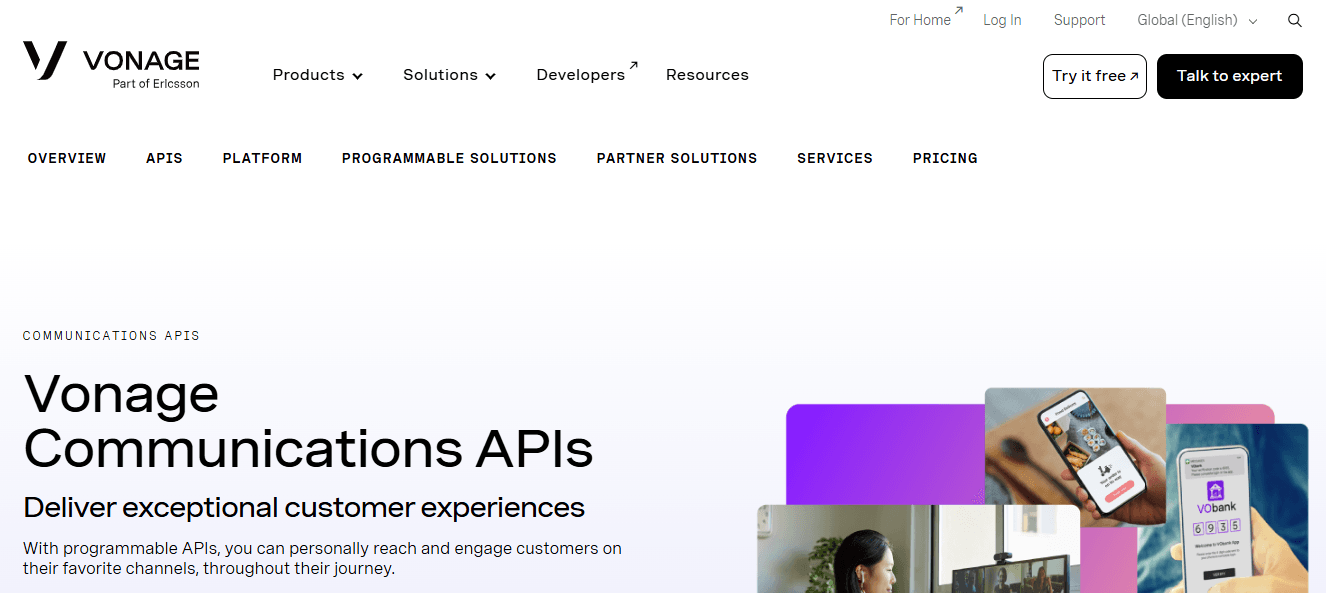
Vonage is built for enterprise-scale operations that need to unify communication across multiple teams, warehouses, and regions.
It’s ideal for companies that already use ERPs or CRMs and want to integrate messaging directly into those systems without losing reliability or compliance.
What Makes It Stand Out (Pros):
- Multi-channel support: Combine SMS, voice, and WhatsApp updates within a single system — great for enterprise supply chains.
- Scalable communication: Handles large message volumes for distributed teams managing global inventory.
- Detailed tracking and reporting: Delivery confirmations and analytics give teams visibility into every alert.
- Compliance-ready: Built-in regulatory support ensures messages meet local and international standards.
Cons:
- Setup complexity: It works best for teams with internal IT or integration partners.
- Pay-as-you-go pricing can become costly at high volumes.
Bandwidth: Best for Compliance-Heavy and Regulated Operations
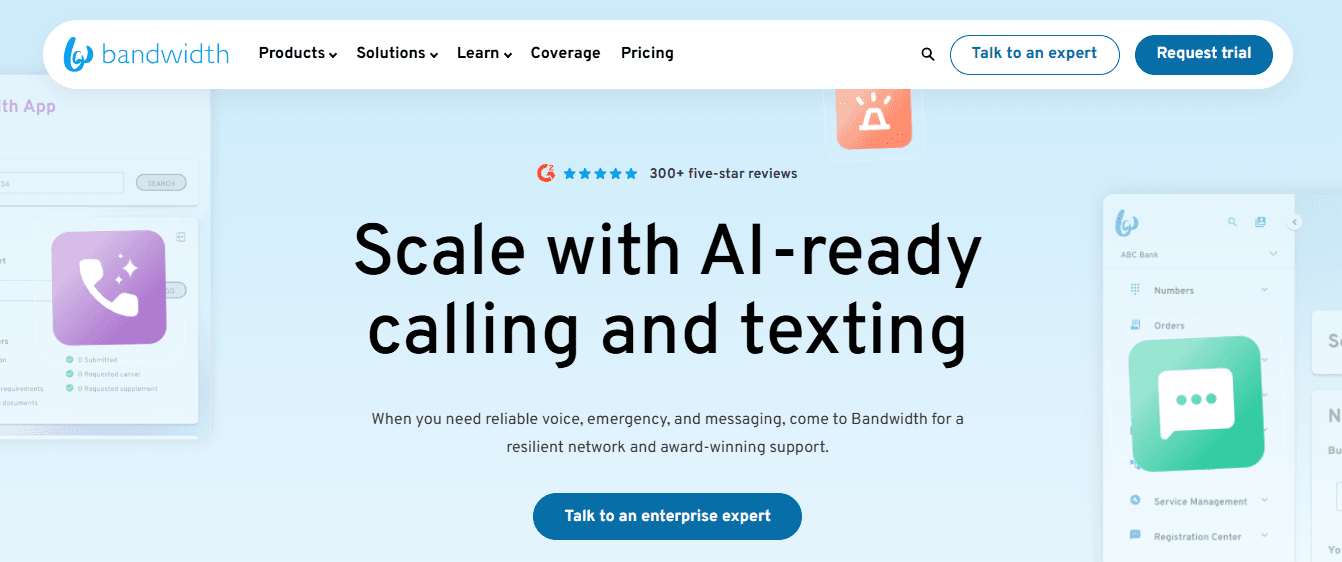
Bandwidth owns its own telecom network, giving it more control over message routing and compliance; a major advantage for industries where message traceability and delivery assurance are critical (like healthcare, logistics, and regulated manufacturing).
What Makes It Stand Out (Pros):
- Direct-to-carrier reliability: Fewer middlemen mean lower latency and fewer failed deliveries.
- Data security and compliance: Meets strict industry standards, perfect for regulated supply chains.
- Enterprise-level control: APIs and dashboards designed for oversight of message flow across divisions.
- Transparent pricing model: Clear per-number or per-message cost structure starting at $0.005–$0.01.
Cons:
- Setup requires technical expertise; not ideal for smaller teams.
- Lacks ready-made automations for inventory workflows.
Bird (formerly MessageBird): Best for Omnichannel Order Tracking
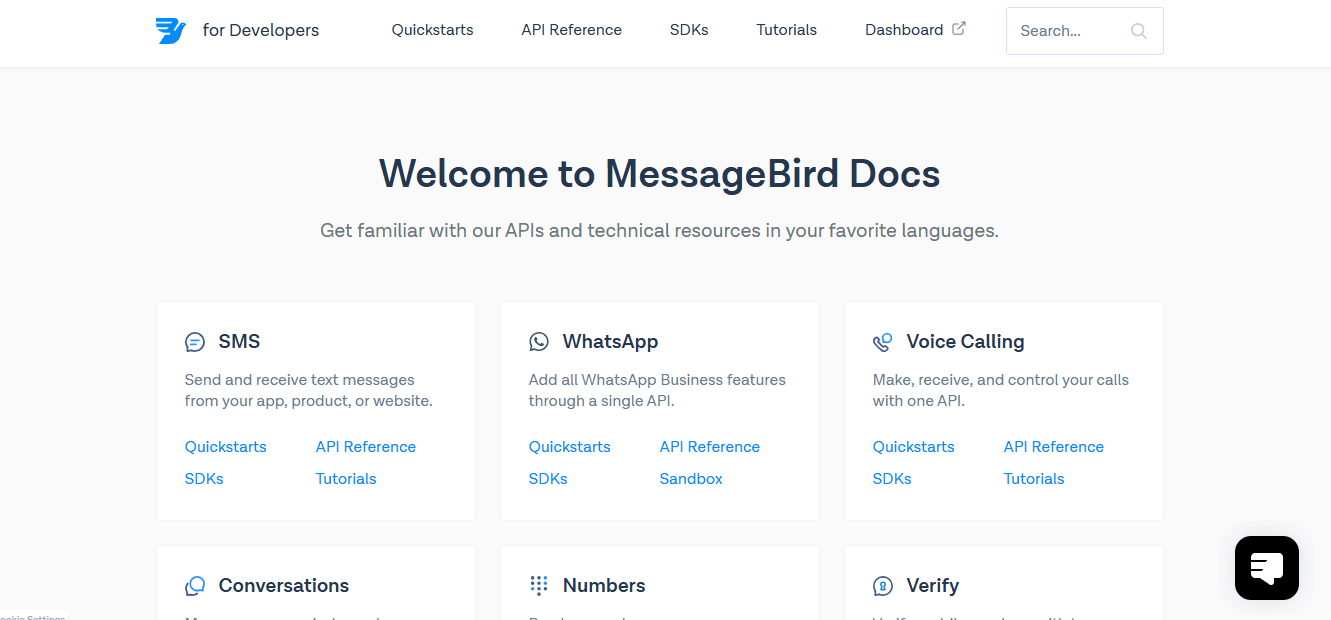
Bird (formerly MessageBird) is great for businesses that need to reach customers and internal teams on multiple channels — SMS, email, WhatsApp, and chat — all in one place.
It helps unify order tracking and customer updates across touchpoints.
What Makes It Stand Out (Pros):
- Omnichannel communication: Manage SMS, WhatsApp, and chat from a single dashboard.
- Customer + internal alignment: Notify both staff and customers on order or stock updates.
- Fast delivery times: Strong carrier network ensures near-instant messaging.
Cons:
- Tiered pricing can feel opaque for smaller businesses.
- Complex features may go unused if you only need SMS.
Another thing to note is MessageBird's “intuitive” pricing. This means you only pay for the specific features you use — like SMS, chat, or WhatsApp. However, if you need multiple channels, each one incurs its own fee, making it difficult to estimate your total cost upfront.
Open-Source Solutions (RapidSMS, Gupshup): Best for Fully Custom Workflows
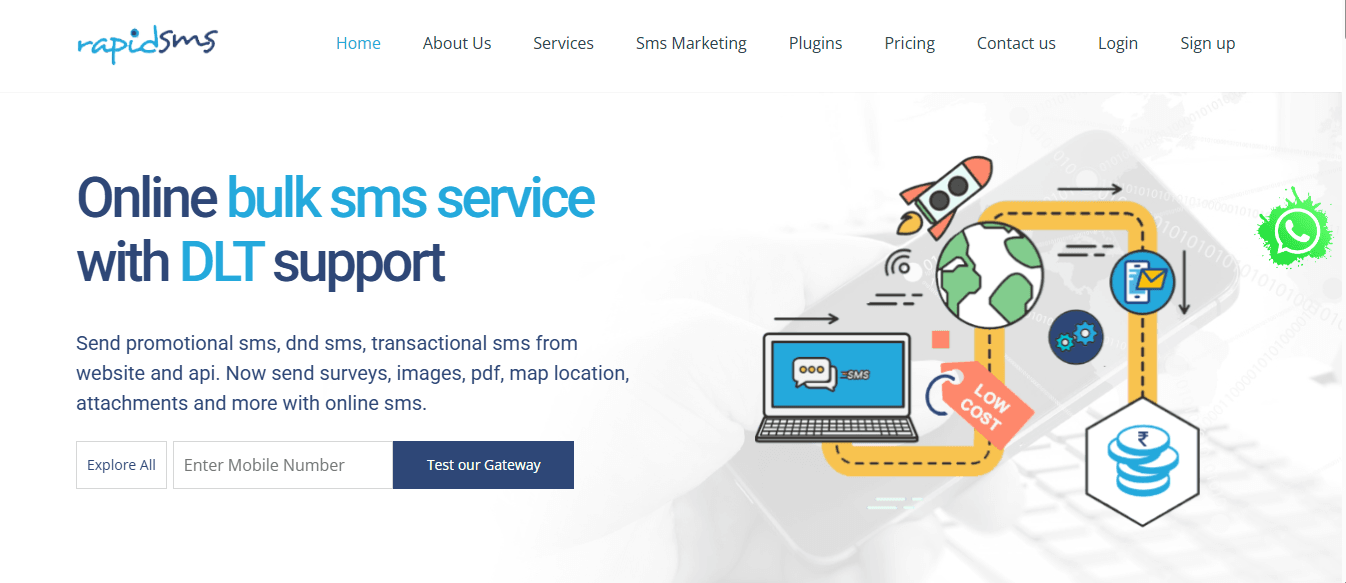
For organizations with strong IT teams, open-source solutions like RapidSMS and Gupshup allow total control over how messaging integrates with inventory systems. They’re flexible and cost-effective but require ongoing technical maintenance.
What Makes Them Stand Out (Pros):
- Fully customizable: Build messaging into your inventory system exactly as you want.
- Low operating cost: Free to use, beyond hosting and setup.
- Flexible scaling: Adapt to your specific architecture or regional delivery needs.
- Community-driven: Supported by open-source contributors and forums.
Cons:
- No official support: All maintenance and troubleshooting is on your team.
- Setup time is longer and requires programming knowledge.
Open source is free to use, but expect hosting and maintenance costs around $50–$150/month, depending on scale.
Your Move: Choose Reliability + Support Before It Costs You
You've seen the alternatives. You know the evaluation criteria. Now comes the decision that determines whether your inventory software’s communication becomes a competitive advantage or a hidden liability.
Mobile Text Alerts has the reliability necessary for operations teams who can’t afford messaging failures. With ~99.95% uptime and plug-and-play APIs and integrations, you can deploy real-time stock alerts in under 15 minutes.
You get predictable flat-rate pricing starting at $20/month and white-glove support from people who understand the difference between a stockout alert and a shipping confirmation. (Plus, access to MCP servers to help make integration as easy as possible.)
Start your 14-day free trial today and see how easy your inventory management software SMS integration can actually be.
FAQ: Setup, Pricing, and Best Practices
What’s the fastest way to set up inventory SMS alerts?
Use an SMS provider that can integrate with your inventory management software. Typically this kind of integration will come in the form of Zapier or API.
When do I need developers or an integration partner for an SMS API?
When you need deeper customization or enterprise-grade integration work. MCP servers can help you accomplish more without as many developer resources, via AI agents.
What pricing models should I expect?
Typically pricing models follow either a subscription model or a pay-as-you-go model - or both, depending on your usage.
How do I validate reliability before going live?
Check the vendor’s status page/outage history (past 6 months), targeting 99.95%+ uptime, building at least one workflow in a sandbox/trial, and testing support responsiveness with a real implementation question.